Until recently, conversations about Uzbekistan's historical heritage beyond the region tended to boil down to a handful of familiar images: Samarkand, the Registan, Bukhara, the Silk Road. In late August, an event in Tashkent and Samarkand set out to noticeably broaden that set of associations.
The international media forum «Islamic Civilization: A New Look — New Discoveries,» held ahead of the 35th anniversary of Uzbekistan's independence, brought together around 300 journalists, media executives, producers, publishers, scholars, and creative-industry figures from nearly 50 countries. Participants included representatives of CNN, Euronews, BBC Studios, TRT World, Oman TV, Report.az, The London Post, and dozens of other foreign media organizations. The forum's main media partners were CNN and Euronews.
Yet the event's significance goes well beyond the roster of famous brands or the number of foreign guests. In effect, Uzbekistan tested out a model of cultural diplomacy: rather than telling the country's story to foreign audiences from Tashkent, the state brought in the very people who talk to those audiences every day.
The visiting journalists saw the country firsthand, gained access to historical sites, scholars, museum collections and new projects, and met with local colleagues and students. The centerpiece of this encounter was the new Center for Islamic Civilization. It was there that the forum began shifting from an international conference into something closer to a media product.
Not a museum tour — a story for the world
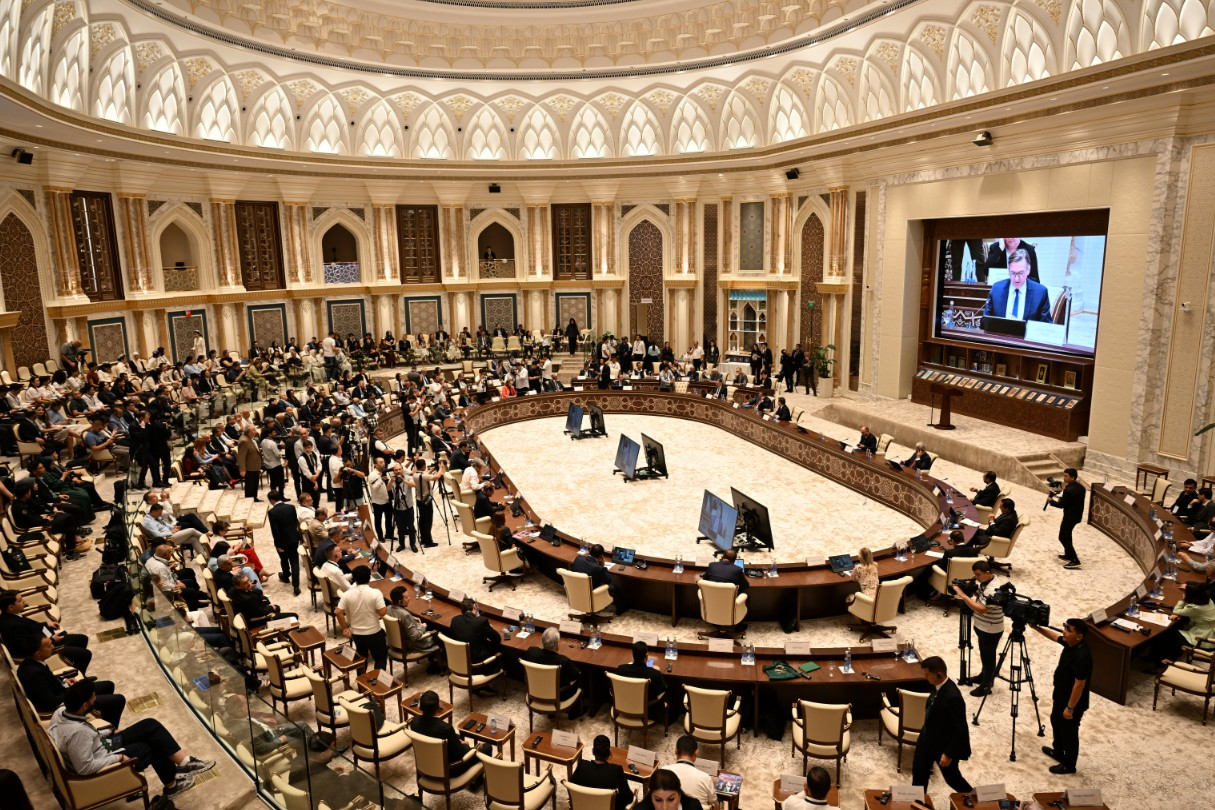 Firdavs Abdukhalikov speaking at the forum. Photo: Center for Islamic Civilization
The Center for Islamic Civilization opened in Tashkent in March 2026. The idea was first proposed by President Shavkat Mirziyoyev back in 2017, from the podium of the UN General Assembly. Today the complex combines a museum exhibition with research and educational spaces, a library, archives, manuscript work, and multimedia and digital technology. At the forum, though, its mission was framed much more broadly.
The Center's director, Firdavs Abdukhalikov, described it as an international cultural, educational and media platform meant to bring together museum work, science, education, television, documentary filmmaking, publishing, digital technology and artificial intelligence. That idea ran through the whole gathering: historical heritage should not live only in display cases and academic papers — it should become raw material for films, books, television projects, podcasts, multimedia storytelling and digital products.
The distinction matters. Uzbekistan has historical material that is significant on a world scale in its own right — the legacies of al-Khwarizmi, Ibn Sina, al-Biruni, Imam al-Bukhari, al-Maturidi, Mirzo Ulugbek, along with ancient manuscripts and monuments spanning several eras. The problem of recent decades has been less about the material itself than about how present it is in the global information space — and in what language it gets told.
Kuwait's The Times Kuwait, reporting after the forum, put the challenge almost bluntly: the question is no longer just about preserving Islamic heritage, but about how to narrate it in a way that is modern, credible and engaging for a generation that learns history through smartphones, social media, streaming platforms and artificial intelligence. The outlet specifically pointed to documentary film, podcasts, short-form video, interactive exhibits and social media as the tools for doing so.
The effect of a first encounter
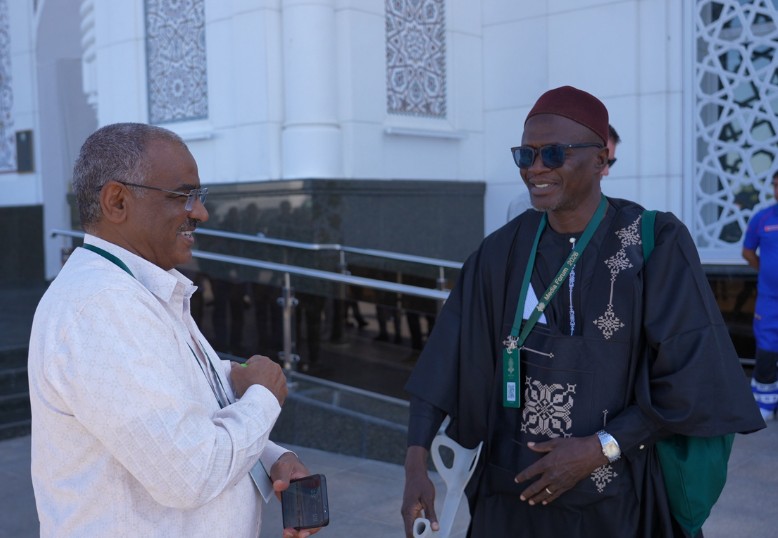 Participants at the Imam al-Bukhari complex. Photo: Center for Islamic Civilization
For many foreign participants, the forum doubled as their own introduction to Uzbekistan. In Tashkent they toured the Center for Islamic Civilization and shared impressions and ideas for promoting the country's cultural heritage; the program then moved to Samarkand, with visits to the Imam al-Bukhari complex, the International Scientific Research Center of Hadith Studies, a new innovation museum, and the city's historic monuments. For some of the foreign guests, this was their first direct contact with places they had previously known only from books, articles and films.
The organizers effectively turned Samarkand into an open film set. Foreign journalists recorded interviews, shot reports and gathered material for television channels, news agencies, documentary projects and digital platforms. An international forum built this way does not end when the last plenary session closes. Journalists go home with contacts, footage, photographs, ideas and their own impressions of the country — impressions that later turn into stories and projects within their home media environments. The first signs of that effect are already visible in the coverage.
Qatar's The Peninsula, whose correspondent worked in Tashkent, described the forum as an attempt to bring Central Asia's intellectual heritage into contemporary global discourse through digital storytelling, artificial intelligence and international media cooperation. The outlet specifically called the Center an international platform for showcasing Uzbekistan's contribution to world civilization.
In a separate piece, The Peninsula noted that the forum gives international journalists access to historical sites, researchers and potential partners in a region whose contribution to global intellectual history remains comparatively underrepresented in the international press.
The Times Kuwait led with another key idea: Tashkent placed world media at the center of a new conversation about Islamic civilization. The authors noted that international media partnerships here are treated not merely as a way to secure event coverage, but as a mechanism for producing long-term content — films, television programs, reports, books and digital projects.
The Organisation of Islamic Cooperation's news agency union described the Center as a space linking history, science and education, and a showcase for Uzbekistan's contribution to the development of human civilization.
Azerbaijan's Report.az also sent a correspondent to Tashkent and published a series of dispatches from the forum. One of them quoted a telling remark from Imran Ahmad, CNN International Commercial's regional representative: international audiences need to be told about Uzbekistan through people, culture and emotion — «the world doesn't fall in love with facts, it falls in love with emotion."
Behind that somewhat promotional line lies a genuinely professional logic. A country can have thousands of monuments and dozens of towering historical figures, yet knowledge alone does not automatically translate into an international image. That requires a story — and it is precisely the ability to craft such stories that Uzbekistan is now competing for.
Why CNN and Euronews actually matter
The partnership with CNN and Euronews became one of the forum's key elements not simply because of two recognizable logos on a banner. It represents infrastructure for reaching a vast international audience — hundreds of millions, potentially a billion viewers and readers. And the partnership at the forum was not merely nominal.
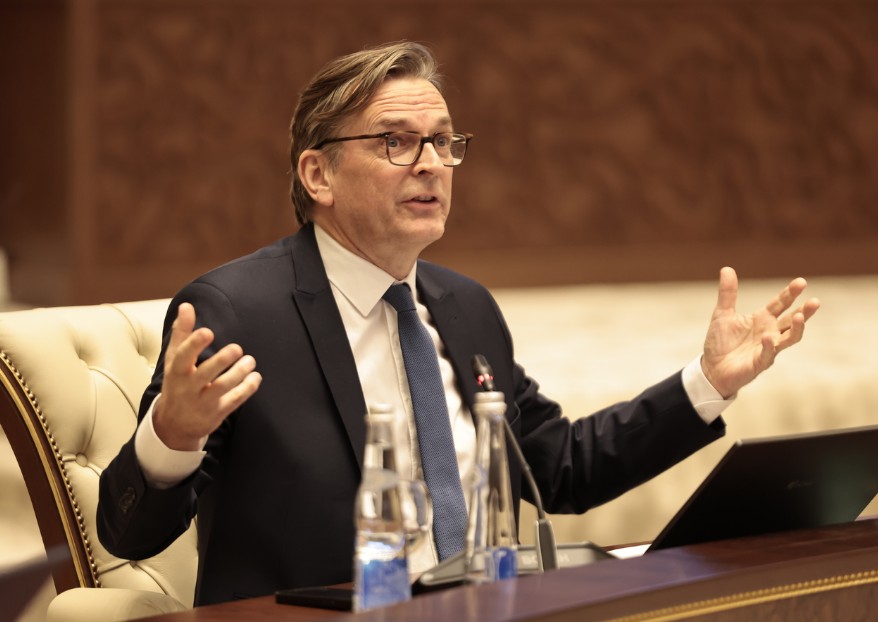 Klaus Strunz. Photo: Center for Islamic Civilization
Euronews CEO and Editor-in-Chief Klaus Strunz personally gave a presentation in Tashkent on the ties between Europe and Central Asia through culture, media and ideas. He argued that Central Asia's history is underrepresented in the international information space and proposed making the Tashkent media forum an annual event.
CNN International Commercial Executive Vice President Phil Nelson spoke about prospects for jointly promoting Uzbekistan's heritage across the network's global platforms. CNN's Paula Hancocks moderated one of the main sessions, while Imran Ahmad presented the network's approach to building stories about Uzbekistan.
That is the forum's most substantial outcome. Tashkent gained more than a few days of attention from foreign broadcasters — it opened the possibility of putting relations with global media on a systematic footing, turning Uzbekistan from an occasional subject of international coverage into a steady source of stories, characters, filming locations and joint projects.
From a familiar past to a modern country
Another important theme came from BBC Studios representative Sergey Stanovkin. In his view, Samarkand, Bukhara and Khiva are already well known abroad. The next task is to tell the world about Uzbekistan's intellectual and scientific heritage, as well as about the new ideas and achievements of the contemporary country. For the «New Uzbekistan,» that distinction matters.
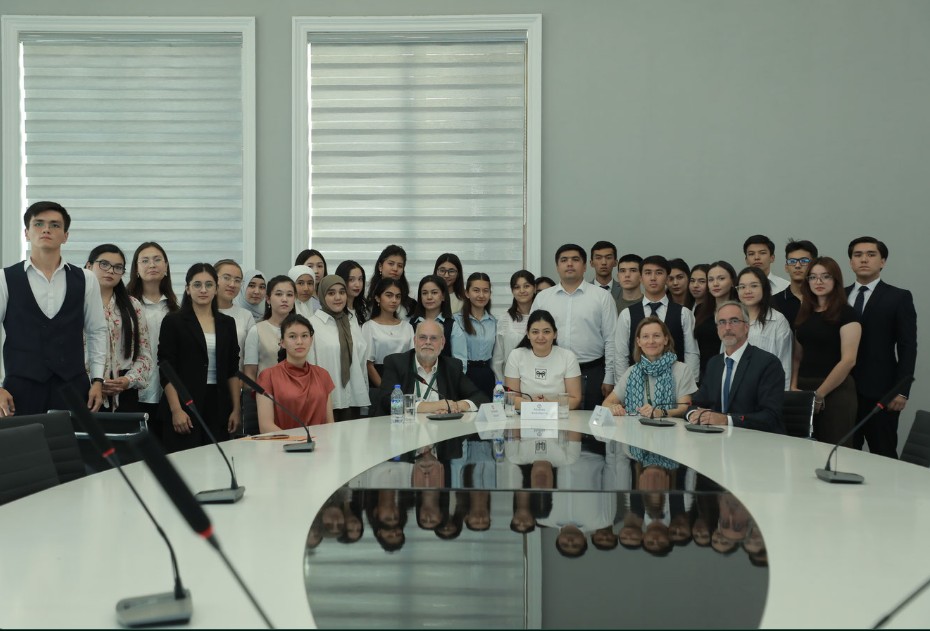 A workshop session. Photo: Center for Islamic Civilization
Tourist recognition and international standing are not the same thing. A country can be famous for its architecture while remaining largely absent from global conversations about science, culture, new technology and modern development. The media forum tried to bring together two Uzbekistans — the historical one and the present-day one.
That is why, alongside manuscripts and an ancient Quran, discussions also covered artificial intelligence, digital avatars, modern museum technology and documentary film. Researchers, journalists, television producers, publishers and technology companies all shared the same platform.
After the forum, The Peninsula singled out the INKSIGHT AI project — a system for recognizing historical manuscripts written in Arabic script. For a foreign reader, that is an altogether different story about Uzbekistan: not just a country of architectural monuments, but a state applying modern technology to study its own vast archival heritage. Stories like this are the kind that can gradually reshape a country's international image.
The Center as a permanent international hub
In that sense, the Center for Islamic Civilization could become more than a new museum for Tashkent. The building itself already functions as a powerful visual symbol. Foreign visitors' reactions to the complex are often more emotional than any official presentation could produce. The Center's website has collected impressions from politicians, diplomats and international figures who call it one of the most striking museum projects of recent years. Euronews Chairman Pedro Vargas David, after touring the Center, said he had never seen anything like it and was struck by the attention to every detail.
But the project's real value may lie in what happens inside this space after the initial impression fades. The forum demonstrated a possible model: the Center hosts international journalists and producers, connects them with historians and researchers, provides access to its collections, and offers subject matter that can grow into films, books, television programs and digital projects.
In other words, it can function simultaneously as a museum, a research center, an international press hub, and something like a factory for cultural content. Even before the forum, the Center's materials and projects had already appeared in the media of 65 countries. International projects have included hundreds of news and media pieces, feature-length documentaries, video projects, television reports and books.
At the forum, organizers moved to institutionalize that work. Around 20 agreements and memoranda were signed. The resulting proposals included an International Media Alliance, professional journalist exchanges, joint content production, an international media competition, and turning the forum itself into a recurring event. Roughly 50 additional joint international media projects are expected to launch in the next phase.
If that happens, the Center takes on a very different role: a permanent gateway into Uzbekistan for the international media industry.
A separate but telling measure of the forum's ambition was its educational component. Visiting media executives and journalists were not confined to sessions at the Center. Dozens of meetings and workshops took place at universities in Tashkent and Samarkand. In just the first two days, 33 events were held across 19 universities in the capital, before the program continued in Samarkand.
If the goal is to build a genuine international information presence for Uzbekistan, buying airtime or flying in foreign celebrities is not enough. The country needs its own journalists, producers and editors who can operate at the same professional level. Following the forum, the Center for Islamic Civilization and the University of Journalism and Mass Communications launched a joint training program for young journalists focused on the country's history and cultural heritage.
A country becomes the source of its own story
For decades, the image of Central Asia for much of the outside world was shaped from beyond the region itself. International media tended to arrive mainly at moments of political crisis, major elections, conflict or emergency. Culture and history were usually treated as niche subjects.
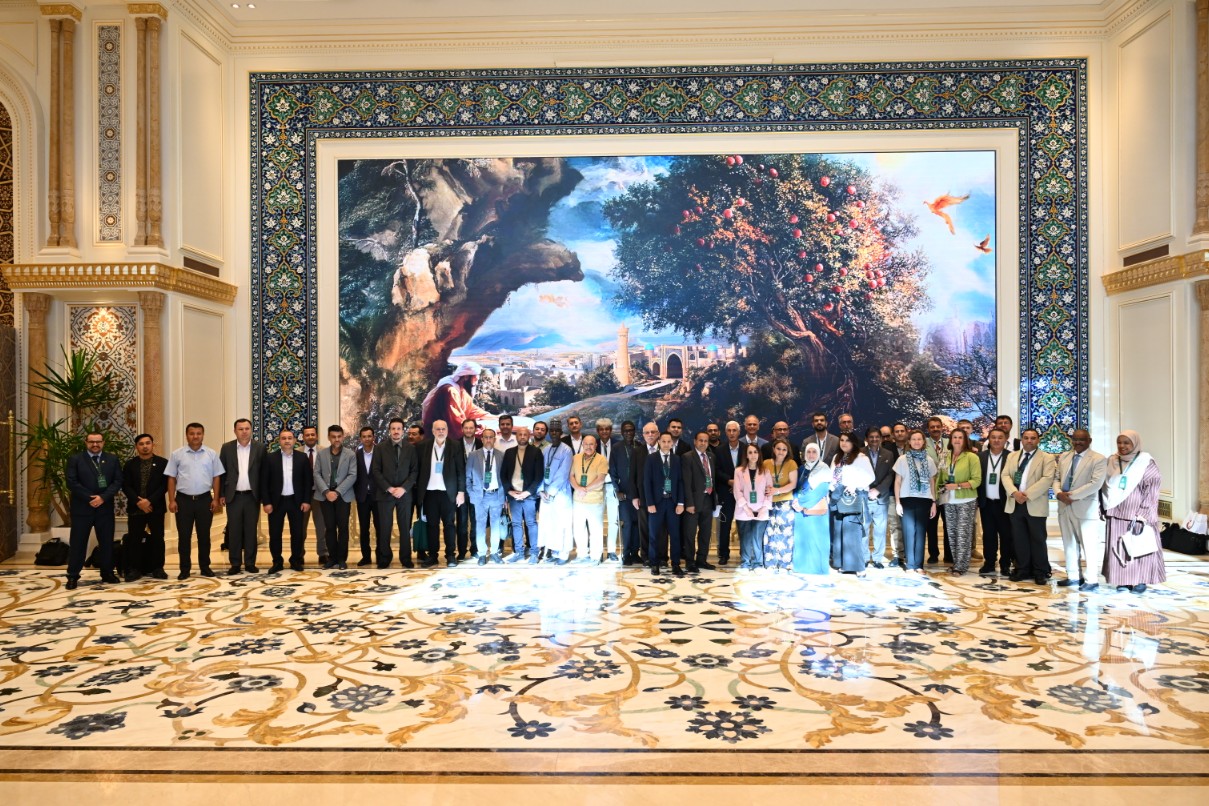 Media forum participants. Photo: Center for Islamic Civilization
Uzbekistan is now trying to change the basic terms of its presence in the international information space. The country is offering the world its own stories while simultaneously opening access to them for foreign journalists. It is inviting major broadcasters not just to cover an event, but to build joint projects. It is presenting historical heritage not as decorative backdrop, but as raw material for contemporary film, television, science, technology and education.
Judging by early coverage, the foreign press took note. The Times Kuwait saw in Tashkent a new international conversation about how to talk about Islamic civilization with a modern audience. The Peninsula saw an attempt to move Central Asia's intellectual heritage into the global digital space. The OIC news union saw an international platform where Uzbekistan showcases its contribution to world civilization. Report.az saw a place where people are working out how to turn a country's history into a story the international audience can understand.
In the end, the forum itself became an illustration of the very idea it promoted: that historical heritage can be a modern media product. To make that case, journalists from around the world traveled to Tashkent, and by the forum's close a declaration had been adopted, including a number of notable project proposals, along with an appeal to the country's president.
The most important question now is whether the interest generated can be turned into a lasting stream of films, publications, television projects, international collaborations and repeat visits by journalists. If it can, the Center for Islamic Civilization will carry significance well beyond the museum world, and the forum itself may become one of the tools through which Uzbekistan steadily claims its own place in the global information space.
At that point, the story will no longer be about the world coming to look at Samarkand or Bukhara. It will be about the New Uzbekistan learning to speak to the world directly.
-
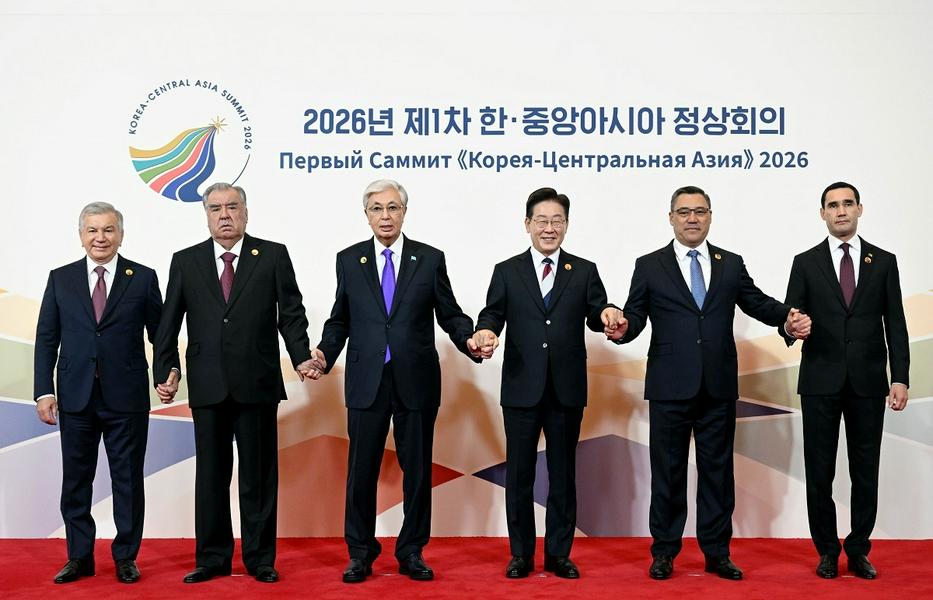 17 September17.09Summit of Morning FreshnessCritical minerals, artificial intelligence — what else was discussed at the “Central Asia–Korea” meeting
 -
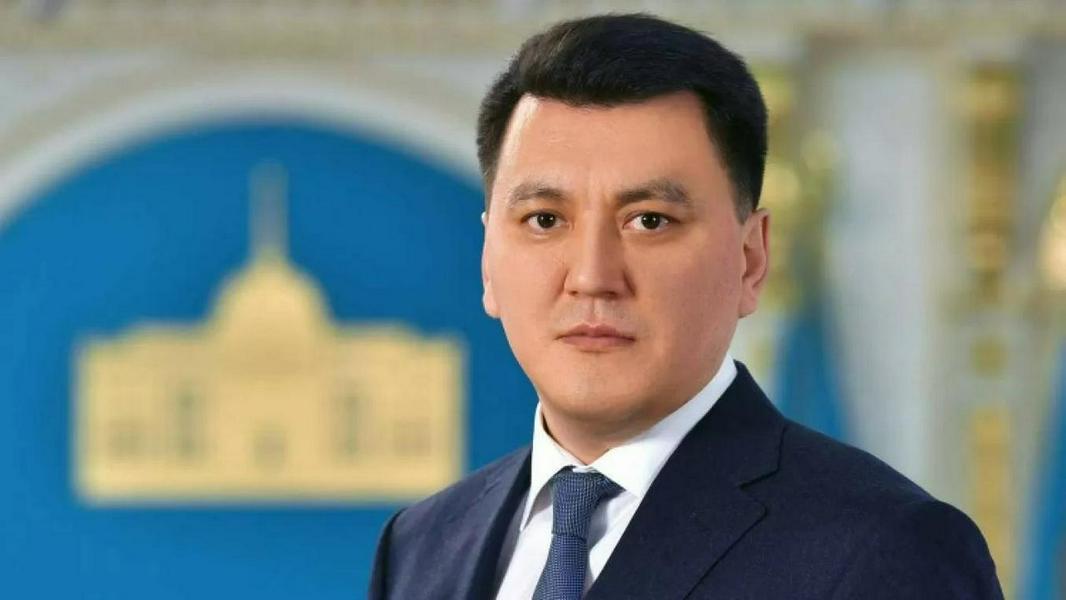 02 September02.09Who Are You, Mr. Vice President?From Analyst to Kazakhstan's Second-in-Command: How Erlan Karin's Views Have Evolved
 -
 30 August30.08The Real Intrigue Comes LaterObservers and experts assess Kazakhstan’s first elections to the new Kurultai parliament
 -
 21 August21.08Elections to a Weakened KurultaiBerit Lindeman, Secretary General of the Norwegian Helsinki Committee, on democracy and the parliamentary campaign in Kazakhstan
 -
 10 August10.08A Caravan in the Expanse of the UniverseHuman rights defender and journalist Farid Tukhbatullin on the past, present, and future of the Turkmen people
 -
 18 July18.07From Survivor to ActivistDina Tansari explains how Kazakhstan’s NeMolchi movement fights violence, police failures and state pressure
-
The world's tallest dam is being built in Tajikistan on empty reserves and other people's loans
-
What lies behind Kiriyenko’s visit to Uzbekistan?
-

The story of the persecution of a Kazakh priest who entered into open conflict with the Russian Orthodox Church
-
Why Kyrgyzstan Dismissed an Influential “Gray Cardinal” and What May Follow