 Photo: from japan.kantei.go.jp.
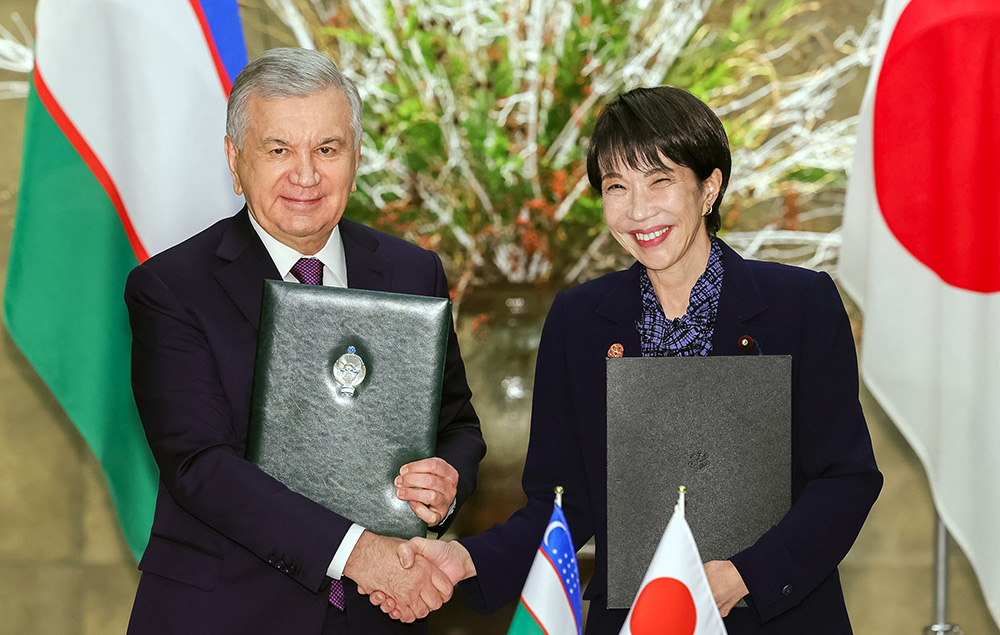
Uzbekistan and Japan have officially elevated their relationship to the level of an expanded strategic partnership. The step was formalized in a joint statement signed in Tokyo following talks between President Shavkat Mirziyoyev of Uzbekistan and Prime Minister Sanae Takaichi of Japan.
The negotiations addressed the strengthening and deepening of Uzbek–Japanese cooperation across key areas. The sides noted steady growth in bilateral trade, investment volumes, and the number of joint ventures with Japanese capital. Among the companies successfully operating in Uzbekistan are Sojitz, Toyota Tsusho, Sumitomo, Itochu, Kyoto Plaza, Balcom, and Shikoku Electric.
Joint projects with the Japan International Cooperation Agency (JICA) and the Japan Bank for International Cooperation (JBIC) span the energy, petrochemical, transport, education, and agriculture sectors. In preparation for the summit, a new project portfolio worth more than $12 billion was formed, with a proposal to establish a joint investment platform to support its implementation.
The two sides discussed prospects for cooperation in green energy, digital technologies, critical minerals extraction, mechanical engineering, modernization of health care, and tourism infrastructure. They supported a proposal to create a special economic zone based on the Japanese model in the Samarkand region and to scale up the joint “One Village, One Product” program.
Particular attention was given to developing parliamentary friendship groups, economic cooperation committees, and sectoral working formats. To promote interregional ties, it was proposed to hold the first Uzbekistan–Japan Regions Forum in Samarkand next year.
In the humanitarian sphere, the sides agreed to expand exchanges in education, science, and culture. Uzbekistan hosts a Uzbek–Japanese Human Resources Development Center, and the Japanese language is taught at seven universities in the country. At the Tokyo University of Foreign Studies, Uzbek has been taught for more than a decade.
During Mirziyoyev’s visit to Japan, several documents were signed, including an intergovernmental agreement on cooperation in higher education and a memorandum on establishing a joint Uzbek–Japanese University in Tashkent on the basis of the University of Tsukuba. The agreements provide for the creation of a joint commission on education and science and an innovation consortium.
In addition, a package of agreements was adopted covering health care, ecology, water resources, transport, urban development, tourism, agriculture, and disaster risk reduction. A roadmap will be developed to implement the agreements.
During the visit, President Mirziyoyev also held talks with Emperor Naruhito, parliamentary leaders, members of friendship leagues, Japanese government officials, the mayor of Nara, and rectors of leading universities. Discussions focused on expanding cooperation in political, economic, investment, and cultural and humanitarian fields. The business program included a forum and meetings with executives of major Japanese companies and financial institutions.
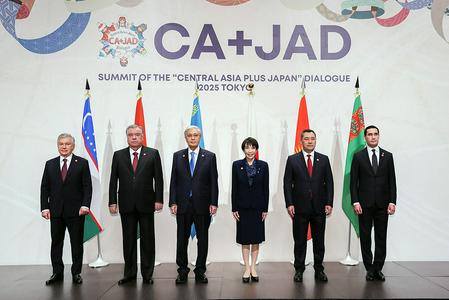
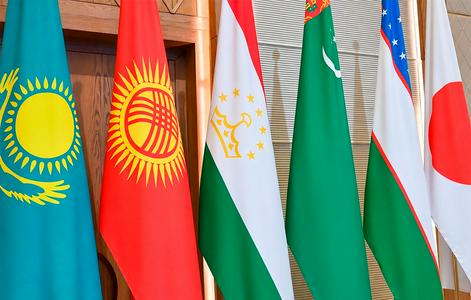
Mirziyoyev also took part in the first summit of the “Central Asia + Japan” Dialogue, where he presented initiatives to advance cooperation. The meeting concluded with the adoption of the Tokyo Declaration.
In addition, Days of Uzbek Culture were held in Tokyo, featuring a concert, a photo exhibition, and displays of traditional handicrafts.