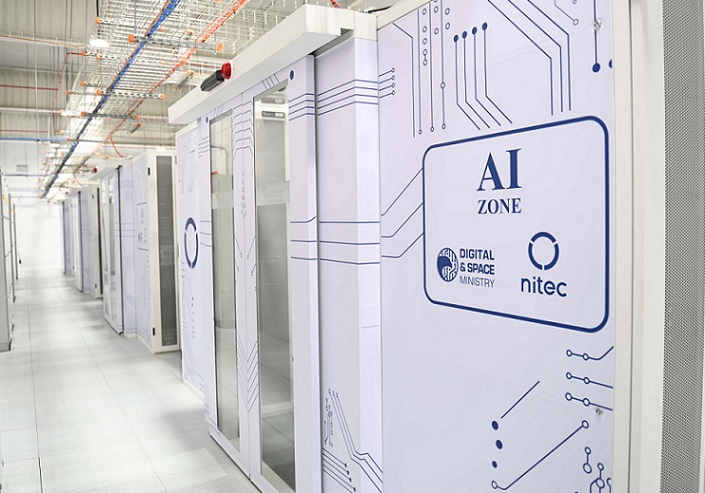
A modern small-scale supercomputer has been put into operation in Uzbekistan, while efforts to acquire a large-scale system of the same type are currently in an active phase. The project will make it possible to establish artificial intelligence (AI) laboratories at 15 higher education institutions across the country. This was discussed at a meeting on the development of digital technologies chaired by President Shavkat Mirziyoyev, according to his press service.
Officials noted that the availability of infrastructure for using AI technologies will significantly enhance the capacity of local specialists, giving them opportunities to develop and deploy their own AI solutions.
At the same time, the need was emphasized to expand the network of modern data centers in the regions, as well as to ensure the security, reliability, and continuity of data storage and processing.
As reported at the meeting, Uzbekistan has in recent years been implementing measures to develop the digital economy and build an innovation ecosystem. According to studies by foreign experts, in 2024–2025 the value of the country’s startup and venture ecosystem reached $3.9 billion. The number of startups exceeded 750, and 15 venture funds are currently operating with total capital of more than $180 million.
Uzbekistan has been recognized as one of the fastest-growing ecosystems in the world and a regional leader in Central Asia in terms of growth dynamics.
By 2030, the authorities plan to increase the number of startups to 5,000 and the number of companies entering foreign markets to 200. Work is also under way to raise the volume of venture investments to $2 billion.
To this end, a four-stage startup support system based on international experience is being introduced in the country. At the stages of idea generation, development, launch, and scaling, the system предусматривает grants, tax incentives, co-financing mechanisms, and compensation for export-related expenses.
The meeting with Mirziyoyev also examined plans for the development of electronic government services in detail. In particular, it is planned to increase the number of digital services to 900, expand the functionality of the MyGov.uz mobile application, introduce AI technologies into more than 50 services, and develop a Unified Population Register. Projects for the full digitalization of business registration processes, the registration of employees of individual entrepreneurs, the issuance of bank cards, the acquisition of SIM cards, and the provision of insurance and advertising services were also discussed.
Special attention was given to the development of telecommunications. The sector is showing stable growth, with increasing internet speed and coverage and improved mobile communication quality. This year, the authorities intend to continue rolling out 5G technologies, expand the number of settlements with high-speed internet access, and make broader use of satellite communications.