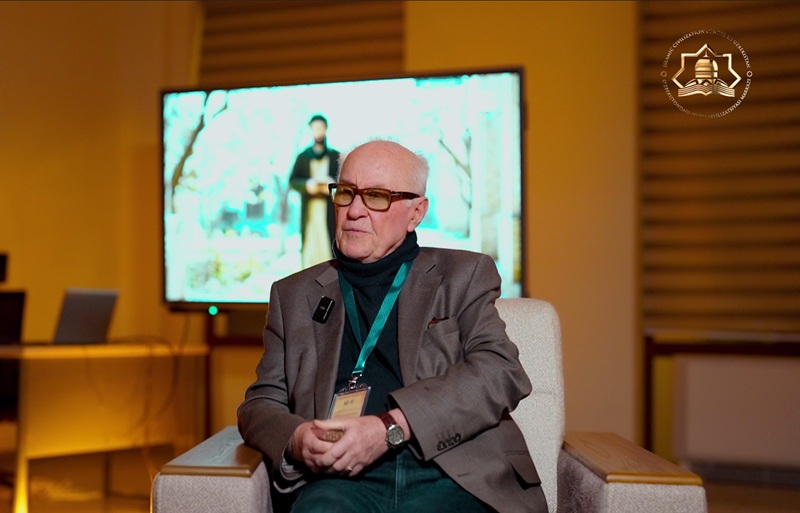
 Ali Khamraev. Photo: cisc.uz.
Uzbek filmmaker Ali Khamraev has given a professional assessment of the short film series The Living History of Uzbekistan, produced at the Center for Islamic Civilization (CIC) in Tashkent, the Center’s press service reported.
According to Khamraev, an expert group has been formed to review completed works and provide recommendations to the authors, ranging from clarifying historical details to refining the tone of voice-over narration and musical design.
Khamraev noted that the creators actively use artificial intelligence technologies, but said the visual component should be complemented by live footage — landscapes, natural sounds, archival materials, and expressive music. Among the most successful works, he highlighted films about Amir Timur and the development of irrigation, which depict the arduous labor of canal builders, as well as films about the region’s first agronomists and the Jadids, the early 20th-century reformist intellectuals, many of whom were repressed.
He also singled out the work of artists who created visual reconstructions of Amir Timur, Ulughbek, Babur, Ibn Sina, al-Khwarizmi, Imam Bukhari, al-Tirmidhi, and al-Farghani, despite the absence of authentic portraits of these figures.
“The Center is conducting large-scale research abroad — in Iran, Turkey, Pakistan, India, the United Kingdom, France, Spain, and the United States. Manuscripts, miniatures, and scholarly works have been found there, some of which had been lost and are now recreated in copies. All this is already being reflected in the films and is returning dozens, and possibly hundreds, of names to cultural memory,” Khamraev said.
The director expressed confidence that The Living History of Uzbekistan has a strong future and suggested eventually creating a feature-length documentary about the Center for Islamic Civilization itself, which, in his view, has already become one of the country’s cultural hallmarks.
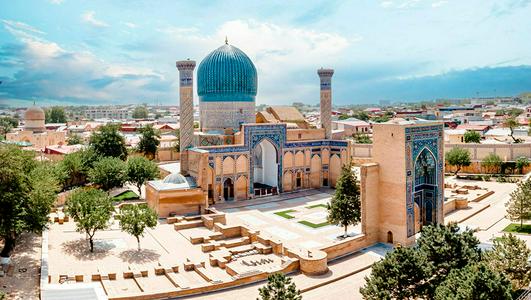
The Center for Islamic Civilization was built in Tashkent near the Hast-Imam complex. The building is designed in the style of medieval architectural monuments, with four portals each 34 meters high and a central dome rising 65 meters. It includes a Quran hall, a 460-seat conference hall, and a museum whose exhibitions cover the full history of Uzbekistan, from pre-Islamic times to the present. The CIC is intended as a platform for studying the heritage of past generations and its contemporary interpretation in cooperation with the International Islamic Academy of Uzbekistan and with research and educational centers worldwide. The Center is scheduled to open in spring 2026.