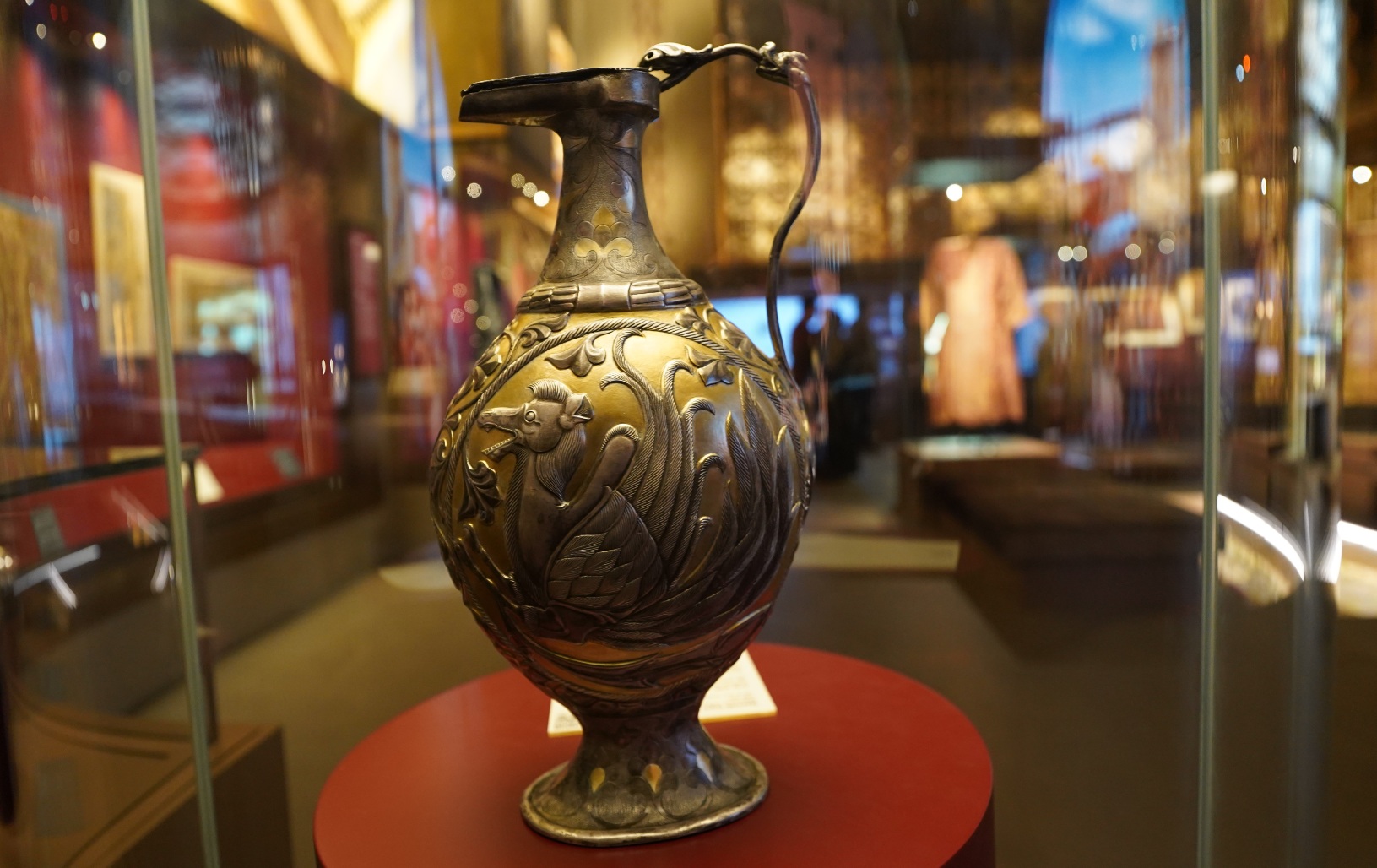
 Vessel. Photo: press service of the Center for Islamic Civilization.
A silver vessel depicting a winged camel and dating back to the 7th–8th centuries has been returned to Uzbekistan from Saint Petersburg and is now on display at the museum of the Center for Islamic Civilization in Tashkent, the Center reported.
The artifact has been placed in the Pre-Islamic Period hall. The vessel is regarded as one of the most valuable examples of early medieval metal artistry. Between the 5th and 8th centuries, a tradition of decorating metal objects with images of animals and mythological creatures—symbolizing strength, protection, and prosperity—was widespread in Central Asia.
The central image of a winged camel reflects a synthesis of the real and mythological worlds and is associated with caravan trade and the Silk Road.
According to specialists, the piece demonstrates the high level of development of Sogdian toreutics (metalworking in relief). The ornamentation is deeply detailed, the composition well-balanced, and the modeling of the figure conveys a sense of movement. In the early Middle Ages, such silver objects were actively involved in international trade, which explains why many similar finds have been discovered outside the region where they were produced.
The Center for Islamic Civilization was built in Tashkent near the Hast-Imam complex. Designed in the style of medieval architectural monuments, the building features four 34-meter portals and a central dome rising 65 meters. It houses a Quran hall, a 460-seat conference hall, and a museum whose exhibitions span the entire history of Uzbekistan—from pre-Islamic times to the present. The Center serves as a platform for studying and reinterpreting historical heritage in cooperation with the International Islamic Academy of Uzbekistan and scholarly and educational institutions worldwide.