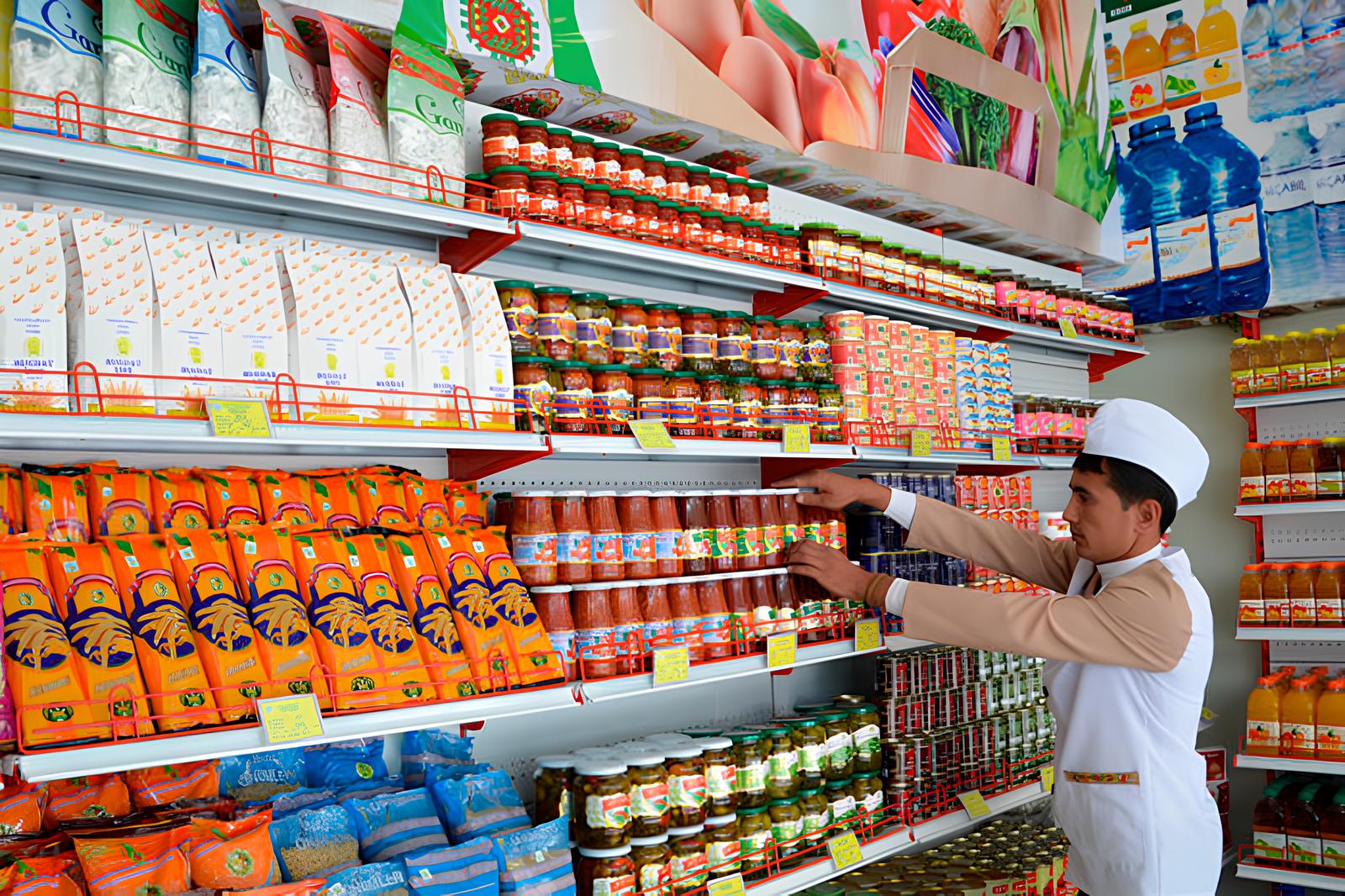
 Food products at a market in Turkmenistan. Photo: Turkmenportal.
With the start of military operations against Iran, prices for food, household chemicals, construction materials, and cigarettes have risen sharply in Turkmenistan. Potatoes and cucumbers have become 3–3.5 times more expensive, citrus fruits have doubled in price, and cigarettes have increased by an average of 35–40 percent. The outlet Turkmen.news reported the figures.
Despite having its own production, Turkmenistan relies heavily on imports from Iran. Local consumers often rate the quality of Iranian goods higher than that of Turkmen alternatives. The war in the neighboring republic has disrupted supplies and triggered a wave of price increases.
Prices for vegetables and fruit have risen most noticeably. At the end of February, a kilogram of Iranian potatoes in Ashgabat cost 5–6 manats ($0.26–$0.31 at the real exchange rate; the official rate is 3.5 manats per US dollar). The price has now reached 17 manats ($0.87). Cucumbers have risen from 8 manats ($0.41) to 17 manats per kilogram. Apples, which sold for 10 manats ($0.51) just a few days ago, now also cost 17 manats.
Oranges have doubled in price—from 9 manats ($0.46) to 18 manats ($0.92)—while mandarins have risen from 12 manats ($0.62) to 22 manats ($1.13) per kilogram.
Household chemicals have so far risen more moderately, although traders warn that this is only the beginning. Liquid laundry detergent Comfort has increased in price from 75 manats ($3.85) to 85–90 manats ($4.36–$4.62). The dishwashing liquid AVE has jumped from 9 manats ($0.46) to 15 manats ($0.77).
Cigarettes have also become significantly more expensive—by about 35 percent on average. The steepest increase has affected Marlboro, whose price has risen from 95 manats ($4.87) to 170 manats ($8.72) per pack.
According to Turkmen.news sources in the construction sector, the price of cement, timber, metal, and other materials has increased by about 40 percent. Some construction supplies had been delivered from the United Arab Emirates in transit through Iran. Businesses are now forced to look for alternative delivery routes—through Georgia and Azerbaijan—which significantly raises logistics costs.
Meanwhile, Turkmenistan’s customs service said that the movement of vehicles and cargo through the border checkpoints of Serakhs, Artık, Howdan, and Altyn Asyr on the border with Iran continues as normal.
“The measures being taken make it possible to ensure the timely delivery of goods exported from Turkmenistan, as well as imports arriving from foreign countries, to their recipients,” the agency said.
Turkmenistan is also assisting with the evacuation of foreign citizens from Iran. According to the country’s Foreign Ministry, as of March 4 more than 200 people from 16 countries—including states in Central Asia, China, Russia, the United States, Finland, Sweden, the Netherlands, Germany, Turkey, and Saudi Arabia—have entered the country from the Islamic Republic.
ℹ️ On February 28, Israel and the United States began massive strikes on targets in Iran. Hundreds of people were killed, including several senior security officials of the Islamic Republic and the country’s supreme leader, Ali Khamenei. In response, Tehran launched missiles at US bases in the Middle East and at Israel. On March 3, Donald Trump said the United States had resources for an “eternal war,” while Iranian authorities declared they were ready to “continue the war for as long as necessary.” According to Politico, the military operation against Iran could last at least 100 days, through September.