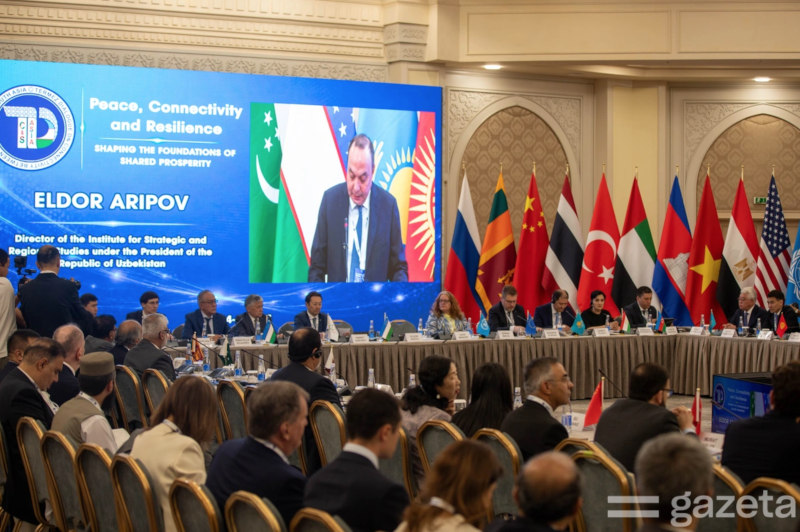
 At a session of the Termez Dialogue. Photo: Gazeta.uz
From June 4 to 6, the second session of the Termez Dialogue on connectivity between Central and South Asia—an international forum established in 2025 at the initiative of Uzbek President Shavkat Mirziyoyev—was held in Tashkent, Termez, and Samarkand. The theme of this year’s session was “Peace, Connectivity, Sustainability: Shaping the Foundation for Shared Prosperity,” Gazeta.uz reported, citing its correspondent on the ground.
The high-level forum was organized by the Institute for Strategic and Interregional Studies (ISMI) under the President of Uzbekistan and the Ministry of Foreign Affairs, in partnership with the Conference on Interaction and Confidence Building Measures in Asia (CICA). It brought together more than 150 representatives from government, business, and expert communities, as well as international organizations from Central and South Asia, Europe, the CIS, the Asia-Pacific, the Middle East, and the Americas—including delegations from Uzbekistan, Afghanistan, Pakistan, Turkmenistan, and Kazakhstan.
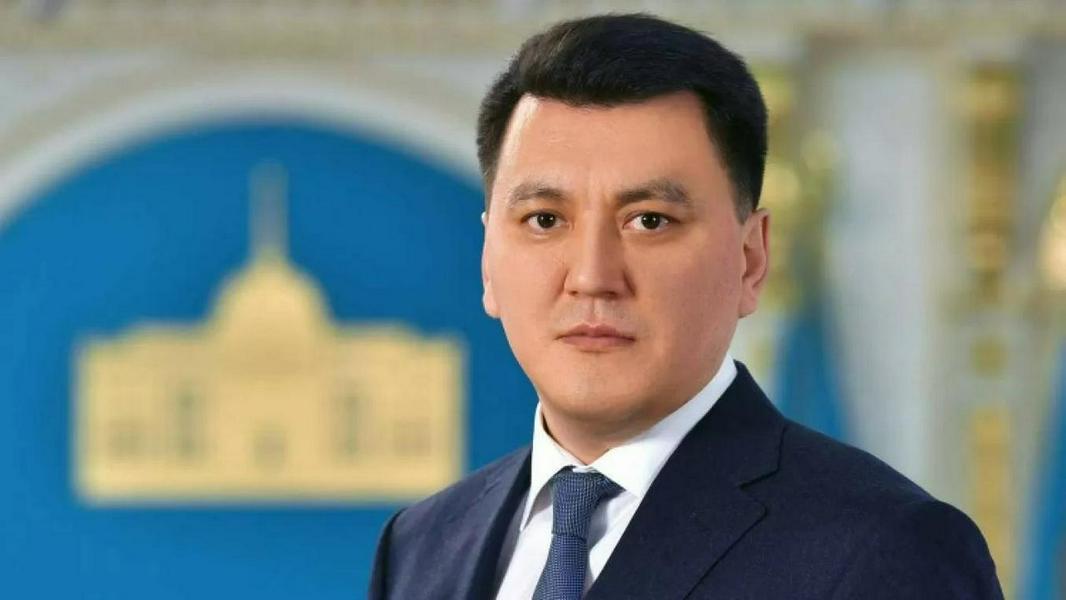
Opening remarks were delivered by ISMI Director Eldor Aripov, First Deputy Foreign Minister of Uzbekistan Bakhrömjon Aloev, UN Special Representative for Central Asia Kaha Imnadze, CICA Secretary General Kairat Sarybai, and CIS Secretary General Sergei Lebedev (via video link). Aloev stressed that in the current geopolitical climate, strengthening dialogue between the two regions “is becoming increasingly important.”
Transport connectivity—and Afghanistan’s role as a transit bridge—was the forum’s central focus. Aripov noted that the shortest route from Central Asia to seaports runs through Afghanistan to Pakistan. Imnadze cautioned against reducing the discussion to infrastructure alone: “Roads and railways can open routes. But it is trust, predictable rules, and sustained political engagement that make these routes safe and durable,” he said, as quoted by Gazeta.uz.
The program featured a plenary session titled “Political Dialogue and Economic Connectivity as Foundations for Sustainable Development in the CICA Region,” along with thematic panels on climate, environmental sustainability, and cultural and humanitarian cooperation. Dedicated tracks addressed Afghanistan–Uzbekistan–Pakistan dialogue, regional security, and youth diplomacy. Participants also visited Termez, where they toured the “Airitom” International Trade Center and the Termez Cargo Center logistics hub. The forum concluded in Samarkand.
On the sidelines, Afghanistan International, citing its own sources, reported that an informal meeting between Taliban representatives and Pakistan took place on June 5 with Uzbek mediation. Pakistan was represented by Amina Khan of the Islamabad Institute of Policy Studies and former ambassador to Kabul Mansoor Khan; the Afghan side by Zakir Jalali and Goncha Gul Arman. The talks unfolded against the backdrop of an acute Afghanistan–Pakistan crisis: in late February 2026, Islamabad carried out airstrikes on Kandahar and Kabul and declared an “open war.” Neither side has publicly confirmed the Tashkent meeting.
A joint communiqué is expected following the second Termez Dialogue, aimed at strengthening trust and advancing sustainable connectivity between the two regions. The inaugural forum, held in May 2025 in Termez, brought together about 200 delegates and was already described by experts as a “sustainable platform.”