President Kassym-Jomart Tokayev has signed a decree amending Kazakhstan's Foreign Policy Concept for 2020–2030. Several formulations in the document have been revised; notably, a direct reference to the first president, Nursultan Nazarbayev, has been removed from the Concept. The outlet «Ak Zhaik» was the first to flag the change.
The previous version listed among the basic principles of Kazakhstan's foreign policy the «continuity of the foreign policy course of the First President – Elbasy N.A. Nazarbayev at a new stage of the country's development."
The new version rephrases the clause as the «continuity of the foreign policy course at a new stage of the country's development."
Also stripped from the concept is the paragraph granting Nazarbayev the right to address the people of Kazakhstan, state bodies, and officials with initiatives on the most important foreign policy issues. Previously, that right was grounded in his «historical mission» and in the provisions of the Constitutional Law «On the First President of the Republic of Kazakhstan – Elbasy."
The changes also reshape the tools of Kazakhstan's foreign policy positioning. Earlier, the government planned to inform the international community about the country's approaches and initiatives in regional and global politics and economics through the Astana Economic Forum, the Eurasian Media Forum, and the Astana Club. In the new version, only the Astana International Forum remains on the list.
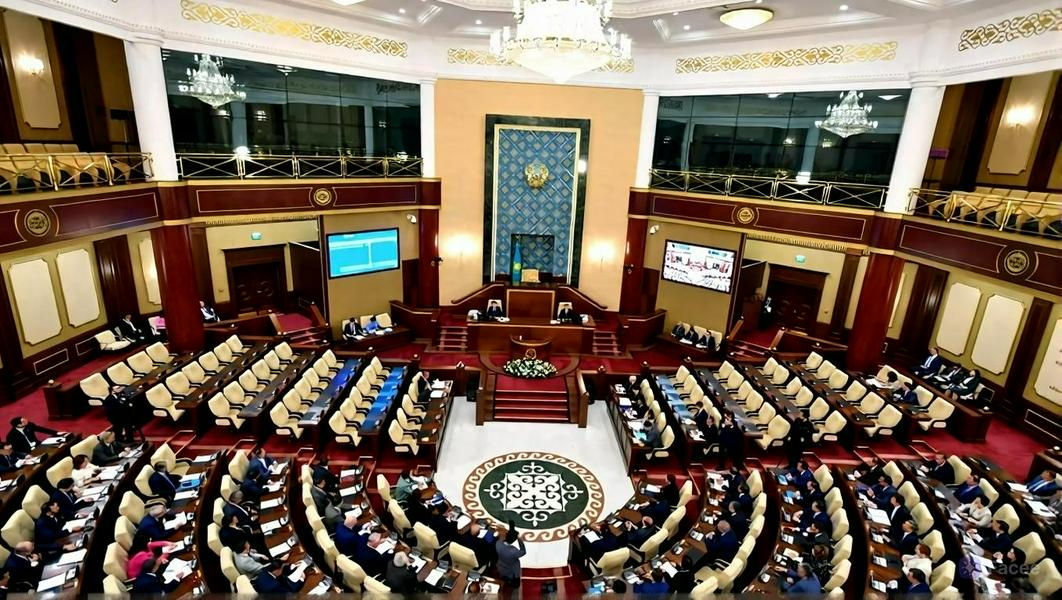
A separate set of changes concerns the country's political system. The concept now describes the Kurultai as the highest representative body of Kazakhstan exercising legislative power.
The decree takes effect on the day of its signing.
The previous version of Kazakhstan's Foreign Policy Concept through 2030 was approved in March 2020. The document set out the main directions of the country's foreign policy in light of shifts in the global and regional environment.
Its key priorities included strengthening Kazakhstan's independence and international standing, ensuring regional and global security, developing relations with Russia, China, the United States, Central Asian countries, and the European Union, and advancing the country's economic interests.
Particular emphasis was placed on attracting foreign investment, expanding exports, developing Kazakhstan as a transit and logistics hub, and protecting the interests of citizens and businesses abroad.