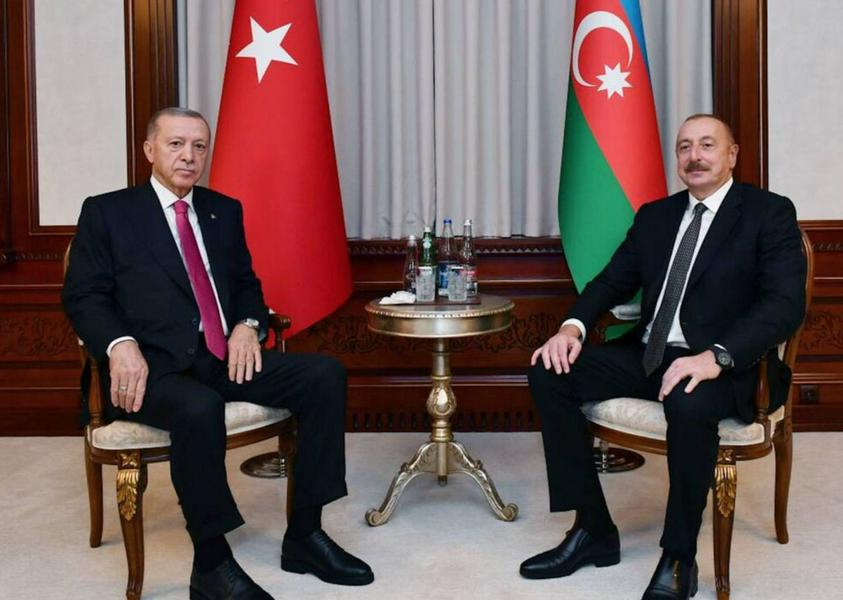
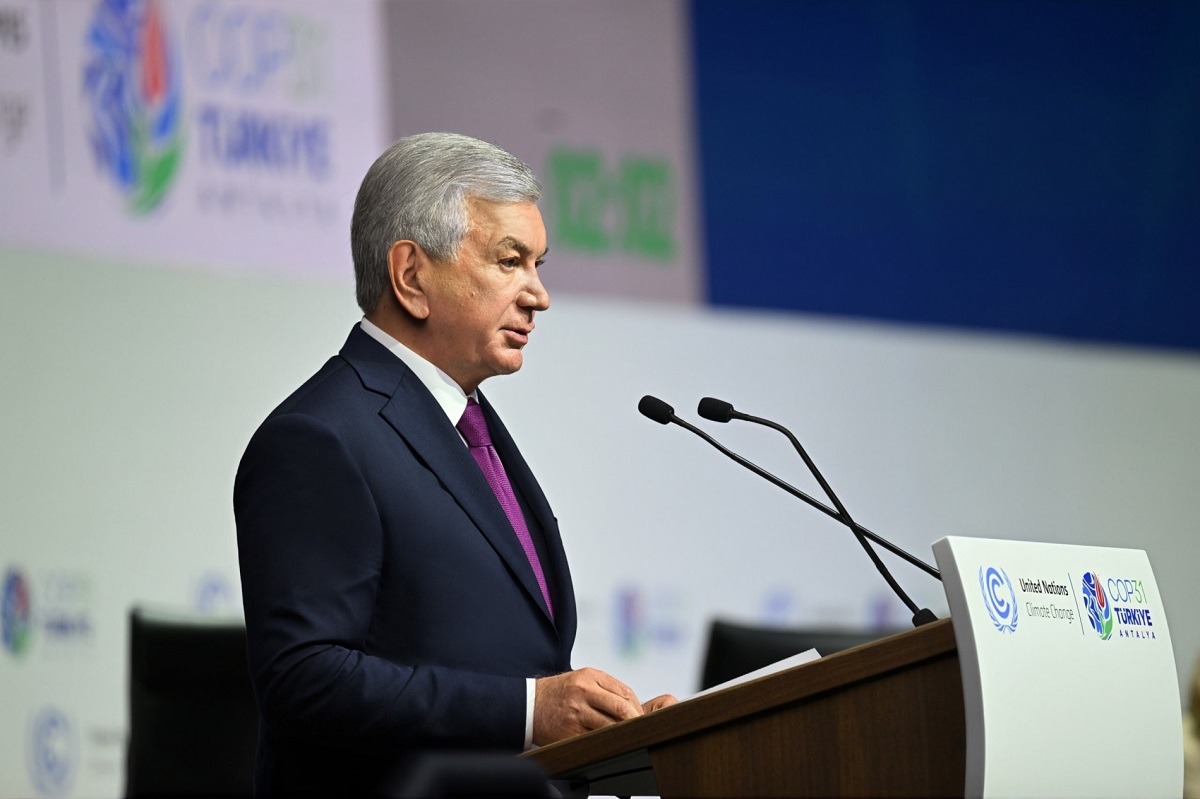
 Shavkat Mirziyoyev. Photo courtesy of the press service of the President of Uzbekistan
President of Uzbekistan Shavkat Mirziyoyev has proposed that Central Asian leaders develop a regional Climate Integration Model. According to the head of state, only concerted action can effectively counter shared threats such as glacial retreat, water scarcity, and severe droughts. The initiative was unveiled at the 31st session of the Conference of the Parties to the UN Framework Convention on Climate Change (COP31) in Antalya, Turkey, the Uzbek leader's press service reported.
The Uzbek president noted that cooperation under the regional Climate Integration Model should logically begin with three priority areas.
The first is information sharing. Here, Mirziyoyev proposed establishing a climate risk data exchange infrastructure in partnership with the World Meteorological Organization.
The second pillar is technology. Mirziyoyev expressed readiness to turn the ECO-EXPO exhibition into a permanent investment and technology platform for cutting-edge environmental solutions tailored to Central Asia's specific needs.
The third is finance. On this front, he urged joint efforts with development banks and targeted funds to craft new support instruments, including concessional grants as well as «blue» and «arid» financing mechanisms.
In his address, the president stressed that Uzbekistan backs global climate action and is shaping its national development model around sustainable resource management and green technologies.
Mirziyoyev also briefed summit participants on Uzbekistan's domestic climate achievements. As part of its decarbonization agenda, the country met its target to cut carbon emissions per unit of GDP by 35% ahead of schedule. A new benchmark has been set to raise that reduction to 50% by 2035.
In addition, over the past decade, the water intensity of the national economy has halved, while overall water withdrawal dropped by one-fifth. Water-saving technologies now cover more than 60% of irrigated farmland.
Active land restoration efforts have expanded forested areas by 6 million hectares, one-third of which are located in the Aral Sea disaster zone.
Key provisions of the National Waste Management Strategy are also being systematically implemented.
The president underscored that care for the younger generation remains at the core of these environmental policies.
«Environmental education in our country begins within the family, the mahalla, and the school. From childhood, we teach our youth to conserve water, nurture trees, and keep our shared spaces clean,» Mirziyoyev said.
He added that one in five Uzbek citizens is currently a school pupil or university student, meaning that by 2050, three-quarters of the population will have received nature-centered education.
ℹ️ The World Leaders Climate Action Summit at COP31 took place in Antalya on November 10–11. The event brought together heads of state and government from over 90 nations, along with leaders of prominent international organizations and financial institutions.
President Mirziyoyev maintained an intensive schedule of bilateral engagements. On the sidelines of the summit, he held talks with the leaders of Georgia, Finland, Slovenia, Bangladesh, and Saudi Arabia, as well as representatives of the Green Climate Fund, the European Bank for Reconstruction and Development, the World Meteorological Organization, the World Bank, and the United Nations Development Programme.