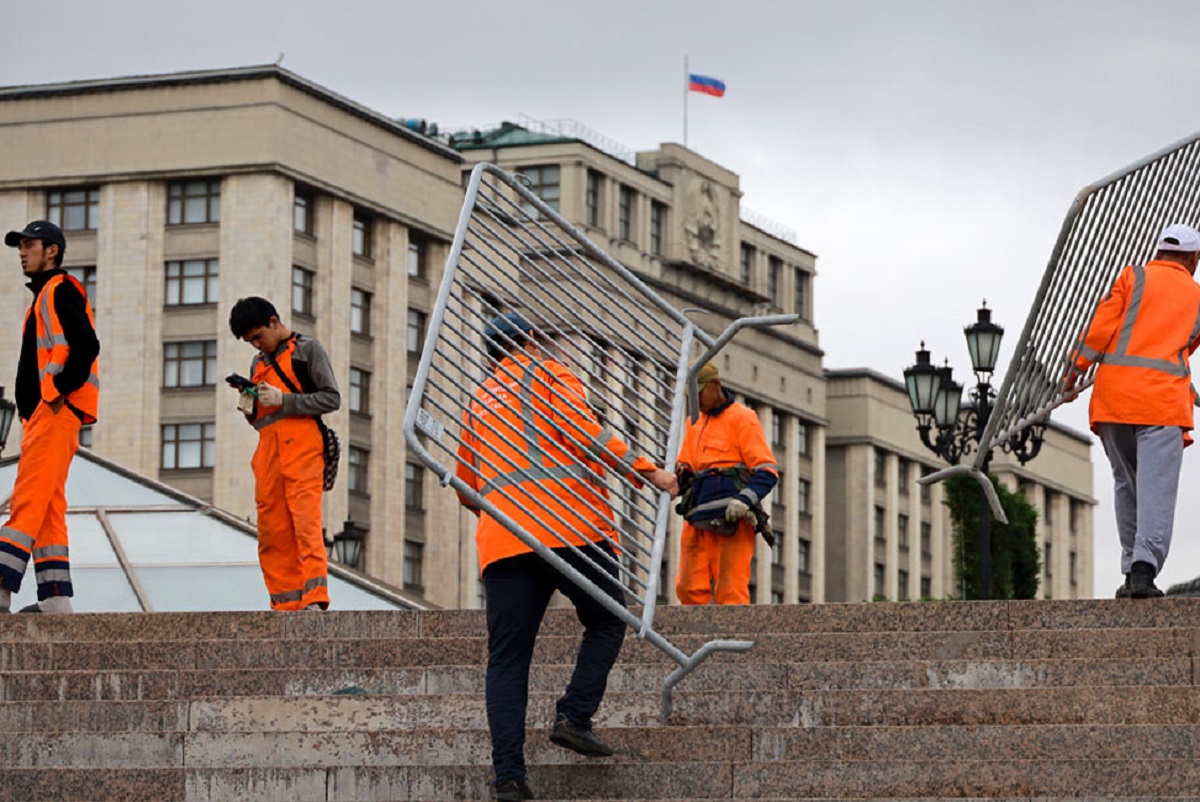
 Photo: Oleg Yelkov/TASS
Between January and September of this year, over 1.5 million citizens of Uzbekistan entered Russia for employment. The Central Asian nation leads all origin countries, TASS reported, citing official statistics.
According to the agency, 1,535,026 Uzbek citizens crossed the Russian border during the first three quarters citing «work» as their travel purpose.
In fact, four Central Asian republics dominate the top five countries sending migrant workers to Russia. Tajikistan and Kyrgyzstan ranked second and third, with 665,892 and 289,061 labor migrants arriving, respectively, over the reporting period.
Kazakhstan followed with 176,037 arrivals. Rounding out the top five was China, with 127,176 citizens arriving in Russia for work during the first nine months of 2026.
Another post-Soviet republic, Turkmenistan, also secured a spot in the top ten.
The nations ranking sixth to tenth in labor migrant arrivals to Russia are as follows:
✅ Armenia — 111,235 people;
✅ Azerbaijan — 83,991;
✅ India — 38,816;
✅ Turkmenistan — 19,038;
✅ Turkey — 12,873 citizens.
According to TASS, a similar trend was recorded last year. Uzbekistan also led the ranking, although roughly 1.8 million migrants from the country entered Russia in January–September 2025. That reflects a year-on-year drop of more than 236,000 workers, or 13%.
Earlier, Russian Interior Minister Vladimir Kolokoltsev stated that 7.5 million foreign nationals arrived in Russia during the first three quarters of 2026, marking a 10% decrease compared to the same period in 2025.
The minister added that as of October 1, around 6.5 million foreign citizens resided in Russia, with roughly 50% of them officially employed.