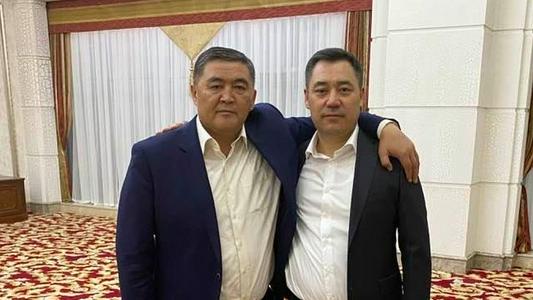
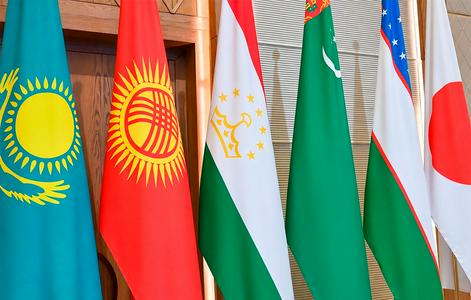
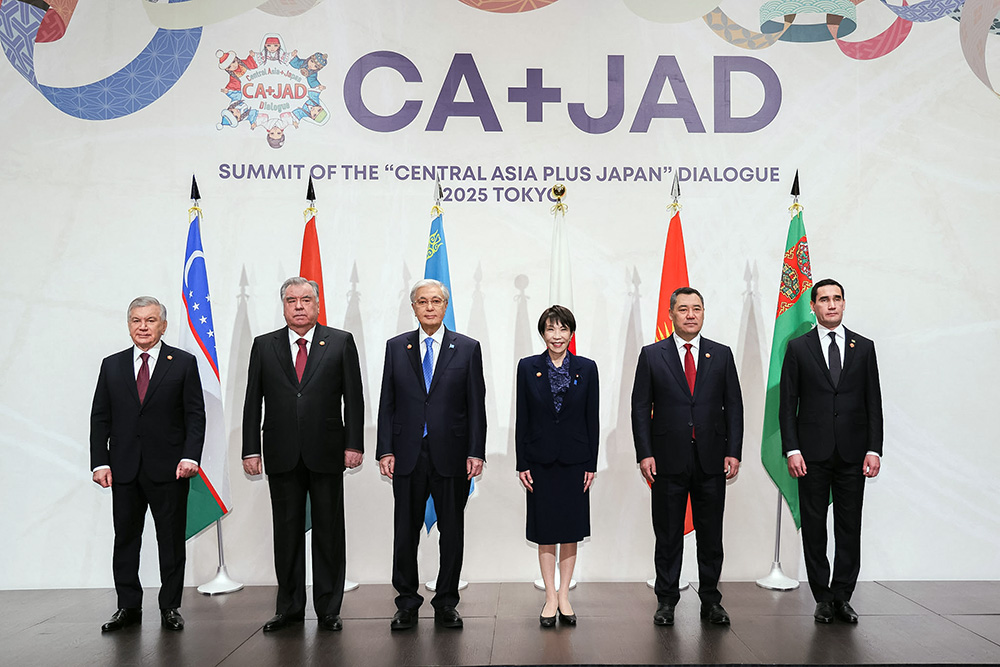
 Participants in the first “Central Asia–Japan” Summit. Photo: japan.kantei.go.jp
Japan is prepared to invest about 3 trillion yen (more than $19 billion) in projects across Central Asia. This was announced by Japanese Prime Minister Sanae Takaichi following the first “Central Asia + Japan” Summit, held in Tokyo on December 20.
“In light of the high expectations for the future of our economic relations, we have set a goal of implementing private-sector projects [in Central Asia] totaling approximately three trillion yen over the next five years,” Takaichi was quoted as saying by her press service.
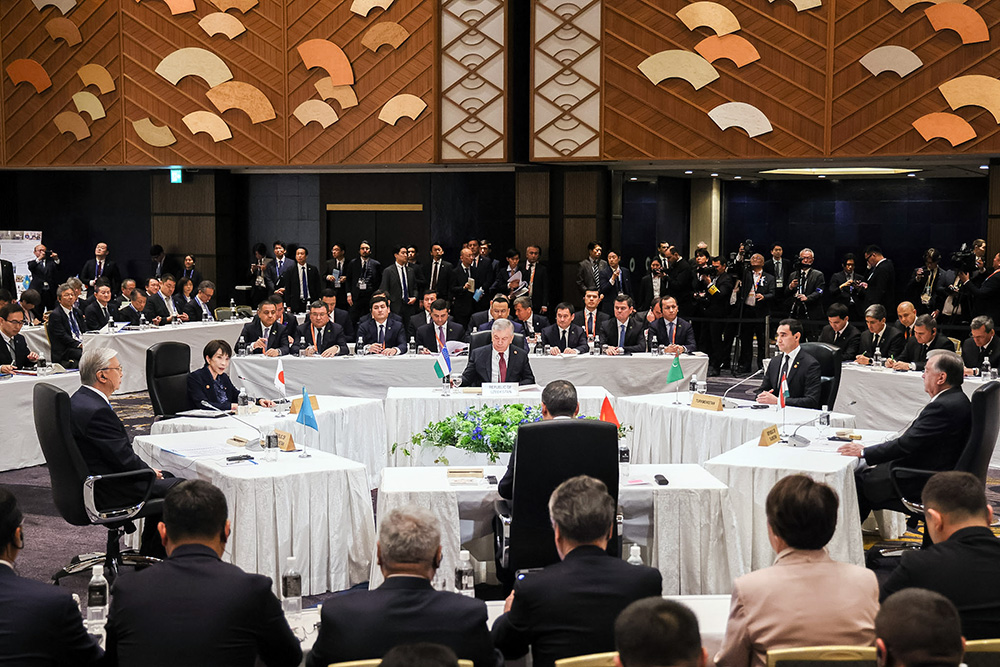 At the first “Central Asia–Japan” Summit. Photo: japan.kantei.go.jp
According to the Japanese prime minister, Central Asia holds strategic importance and significant potential in geopolitics, economic security, and business cooperation. As a result of the summit, more than 150 public- and private-sector agreements were signed, the Tokyo Initiative CA+JAD (Central Asia + Japan Advanced Dialogue) was launched, and the Tokyo Declaration was adopted.
Going forward, Japan will promote mutually beneficial projects in three priority areas: green sustainability, transport connectivity, and human resource development.
“In particular, we expressed our intention to support the uninterrupted functioning of global supply chains, including the Trans-Caspian International Transport Route, and to strengthen cooperation in artificial intelligence through the Central Asia–Japan partnership on AI cooperation,” Takaichi said.
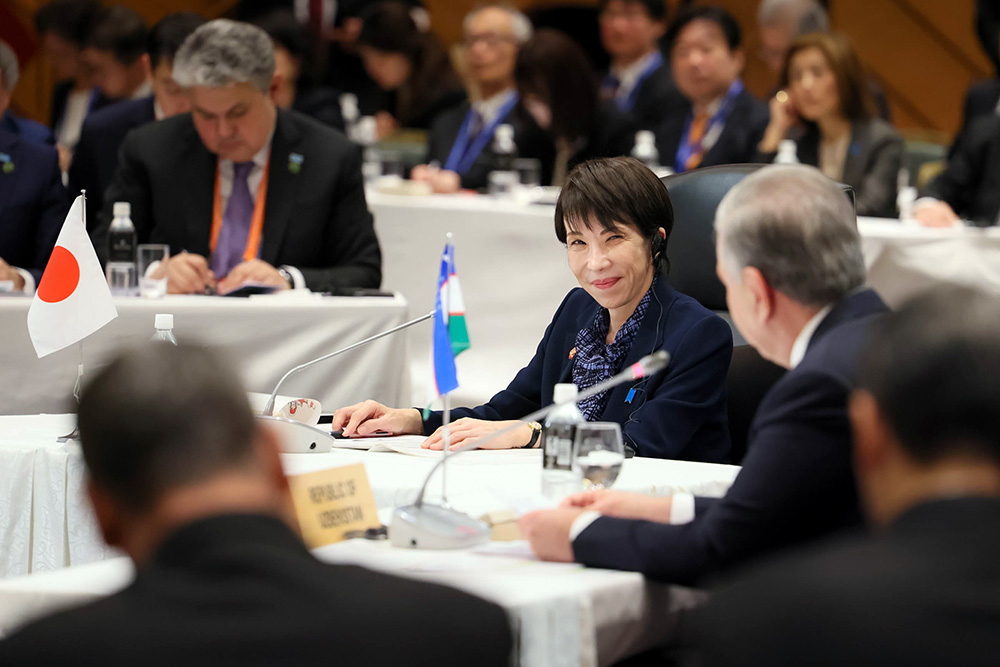 Sanae Takaichi. Photo: japan.kantei.go.jp.
Noting that Central Asia is rich in energy and mineral resources, the prime minister said Japan intends to step up cooperation on critical minerals in order to diversify global supply chains.
The “Central Asia + Japan” summit was attended by the leaders of Kazakhstan, Kyrgyzstan, Tajikistan, Turkmenistan, and Uzbekistan.
 Kassym-Jomart Tokayev and Sanae Takaichi. Photo: japan.kantei.go.jp.
Kazakhstan’s President Kassym-Jomart Tokayev said that Japan is one of the key investors in the country’s economy, with total investments exceeding $8.5 billion. During his visit to Japan, more than 60 bilateral agreements worth over $3.7 billion were signed. Tokayev stated that Kazakhstan is ready to provide favorable conditions for Japanese investors and identified nuclear and green energy, rare earth metals, logistics, and digital technologies as promising areas for cooperation. He also expressed support for the Tokyo Initiative on artificial intelligence and proposed hosting a regional AI platform at the Astana Hub technopark and the Alem.ai International Center.
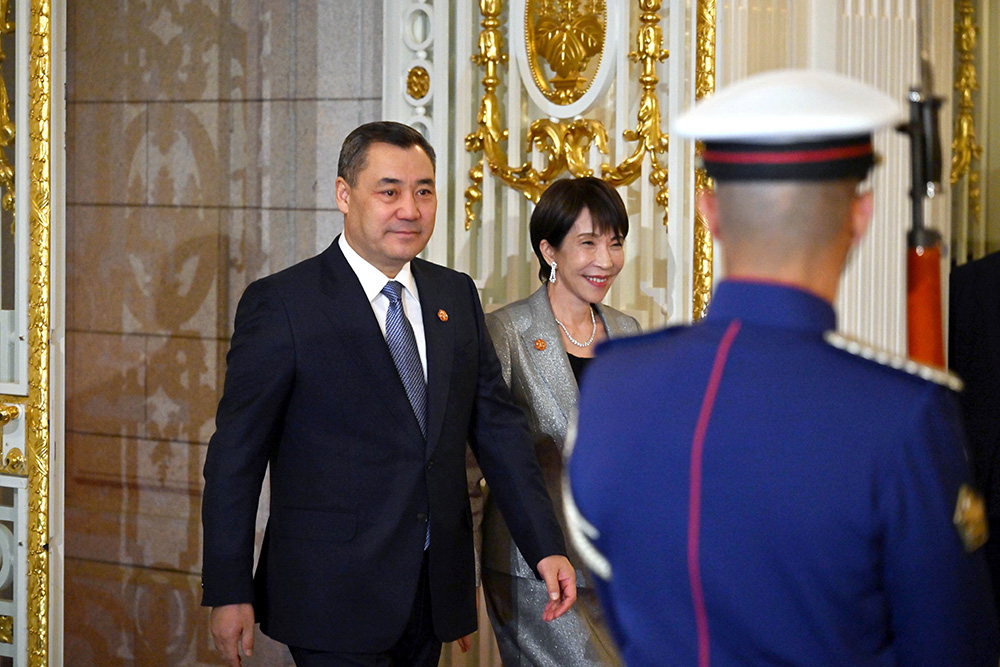 Sadyr Japarov and Sanae Takaichi. Photo: press service of the President of Kyrgyzstan.
Kyrgyzstan’s President Sadyr Japarov confirmed his readiness to support the priorities proposed by Japan—environmental sustainability, connectivity, and human capital development. Noting that climate change poses a particular threat to the mountainous regions of Central Asia, he proposed establishing a regional early warning system for natural disasters and expanding joint water-resource programs. Japarov also emphasized the strategic importance of the Kambarata-1 hydropower plant for the country and expressed interest in Japanese technologies in renewable energy. Separately, he pointed to Kyrgyzstan’s potential as a Eurasian logistics hub and announced plans to develop digital projects based at the High Technology Park.
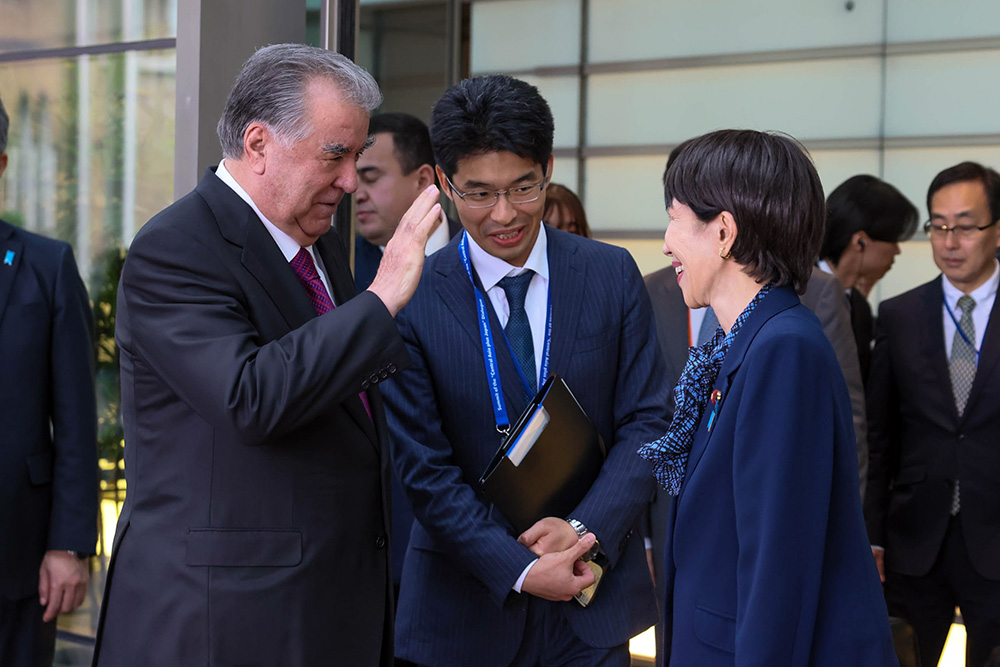 Emomali Rahmon and Sanae Takaichi. Photo: japan.kantei.go.jp.
Tajikistan’s President Emomali Rahmon expressed gratitude to the Japanese government for its long-standing assistance in implementing projects spanning the economy, energy, agriculture, infrastructure, and health care. He reaffirmed the country’s readiness to cooperate in the green economy and hydropower, describing these areas as priorities. Rahmon drew attention to the impacts of climate change and underscored Tajikistan’s leadership in advancing water diplomacy. He invited all interested countries to take part in a high-level international conference under the Dushanbe Water Process, scheduled for May 2026. The president also recalled Tajikistan’s initiative to prepare a United Nations resolution on the role of artificial intelligence in sustainable development in Central Asia, which has been supported by Japan.
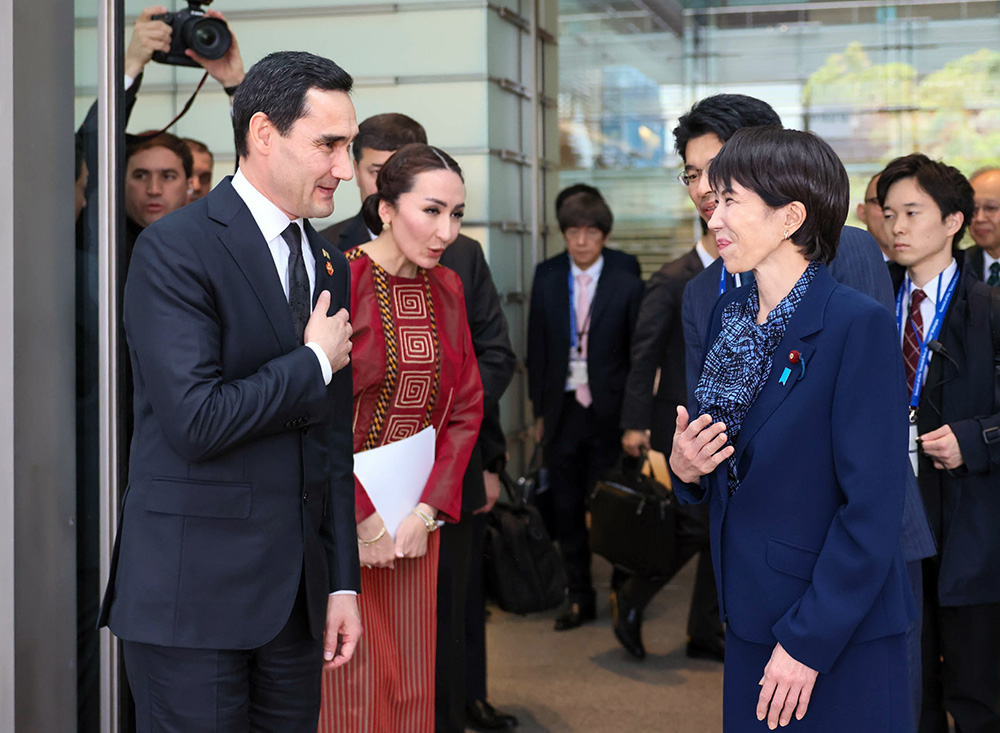 Serdar Berdimuhamedov and Sanae Takaichi. Photo: japan.kantei.go.jp.
Turkmenistan’s President Serdar Berdimuhamedov said the Tokyo summit marked a turning point for the entire architecture of Central Asia’s relations with Japan. He stated his readiness to make the summits regular and emphasized the importance of economic cooperation, particularly in energy, transport, and water management. Turkmenistan is actively working with companies including Itochu, Mitsubishi, Kawasaki, Sumitomo, Toyo, Sojitz, Komatsu, and Toyota on major industrial and energy projects. Among the priorities he outlined were the green transformation of the economy, methane emissions reduction, the development of hydrogen technologies, and the establishment of a regional center for climate technologies. Addressing cross-border connectivity, Berdimuhamedov highlighted the role of the Turkmenbashi International Seaport, new airports, railways, and highways linking Turkmenistan with neighboring countries. He proposed creating a “Central Asia–Japan” Youth Forum and a “Central Asia–Japan Women’s Dialogue” platform, and suggested declaring 2028 the Year of International Law under the auspices of the United Nations.
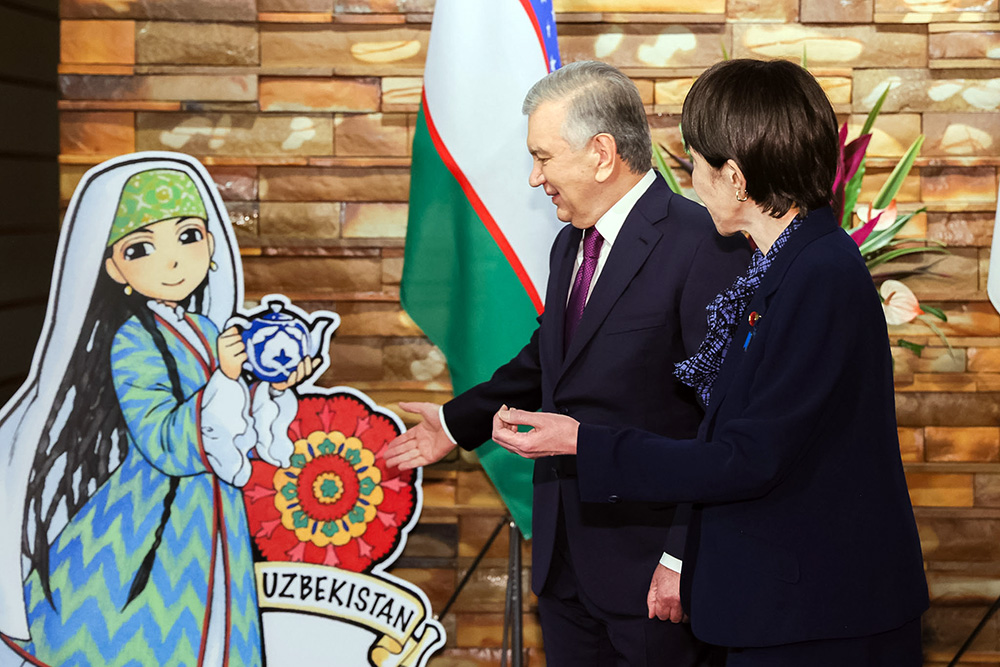 Shavkat Mirziyoyev and Sanae Takaichi. Photo: japan.kantei.go.jp.
Uzbekistan’s President Shavkat Mirziyoyev recalled that it was Japan that more than twenty years ago initiated the “Central Asia Plus” dialogue. He proposed holding leaders’ meetings in this format every two years, including in Tashkent. Mirziyoyev called for elevating cooperation to a new strategic level by combining the region’s natural resources and human capital with Japanese technologies to ensure sustainable development.
The Uzbek leader proposed the development and establishment of:
▪️ a “Central Asia–Japan Cooperation Strategy 2040”;
▪️ an expert forum bringing together leading analytical institutions;
▪️ an investment fund for the development of regional infrastructure and industry;
▪️ a network of Japanese technology parks in Central Asia;
▪️ a “Central Asia–Japan” digital hub for joint projects in artificial intelligence, the Internet of Things, cybersecurity, and the digitalization of transport systems.
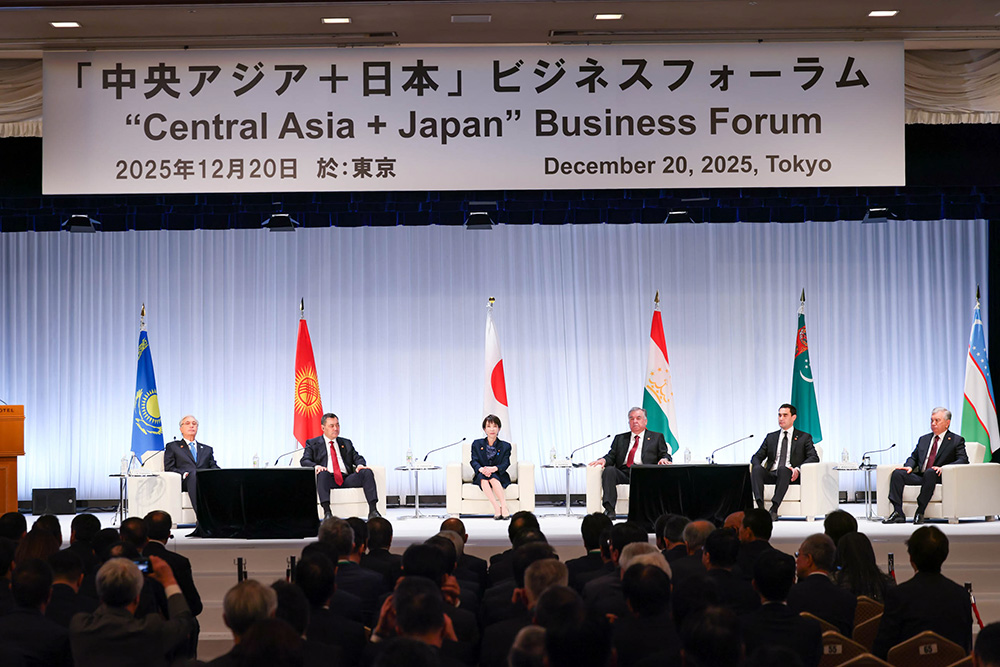 At the business forum held as part of the first “Central Asia + Japan” summit. Photo: japan.kantei.go.jp.
Among Mirziyoyev’s other proposals were the opening in Tashkent of a Regional Training Center for Renewable Energy Specialists, as well as the implementation of an air quality improvement program and a climate change action plan.
The president of Uzbekistan also expressed interest in attracting Japanese investment, technologies, and expert support for projects involving the construction of high-speed railways and highways, the digitalization of transport corridors, and the development of airports and logistics centers.
The next “Central Asia + Japan” summit will be held in Kazakhstan.