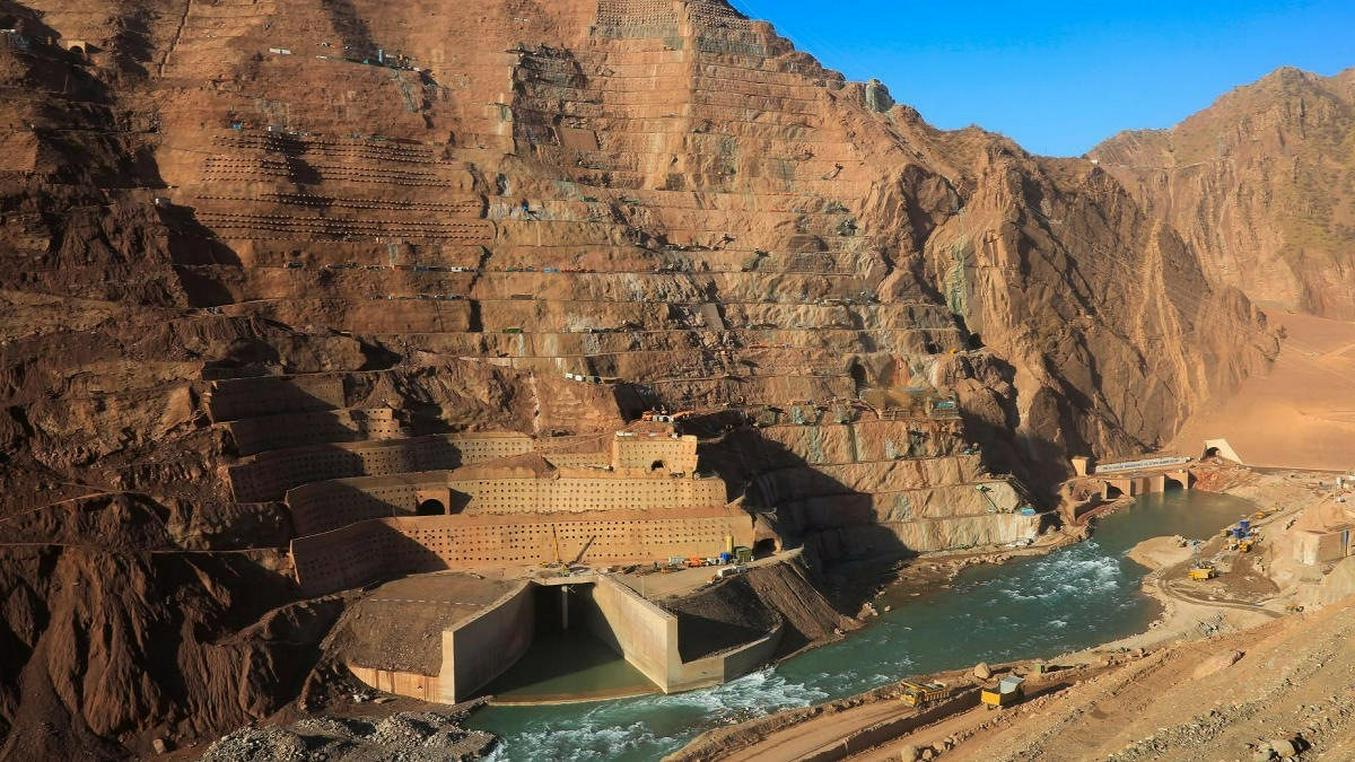
A Himalayan disaster that killed thousands has prompted a tough demand from environmentalists to the World Bank: 111 non-governmental organizations from around the world have urged it to impose a moratorium on financing large high-mountain hydropower plants. Among the projects the bank should stop supporting, they explicitly named Tajikistan's Rogun hydropower plant, according to Rivers.Help!, a portal that publishes news about rivers and dams in Central Asia.
The letter, dated October 12, is addressed to World Bank Group President Ajay Banga, International Finance Corporation (IFC) Managing Director Makhtar Diop and the Board of Executive Directors. Its signatories include International Rivers, the Rivers without Boundaries coalition, CEE Bankwatch Network and the Bretton Woods Project, as well as the Tajik environmental group Medvezhiy Ugol (Bear's Corner) and the Russian organizations Dront and the Wildlife Conservation Center.
The trigger was a rock-and-ice avalanche on August 26, 2026, in the Himalayas on the border between Nepal and China's Tibet Autonomous Region, which unleashed a devastating flood in the Bhotekoshi–Trishuli corridor. According to Nepal's government figures as of late September, cited by the letter's authors, 1,450 people died and another 5,285 are still missing.
Among the missing are about 500 workers at the $650 million Upper Trishuli-1 hydropower plant, which is under construction and financed by a consortium of lenders led by the World Bank Group, with the participation of the Asian Development Bank and the Asian Infrastructure Investment Bank.
The government's damage assessment attributes nearly $1 billion in losses to the destruction of 13 hydropower plants, a third of all physical and economic damage. Kathmandu is requesting $2.5 billion to rebuild its energy sector, or 54% of all the funds the country needs to recover from the disaster.
The authors call the tragedy «entirely predictable» and place responsibility on the World Bank's approach to financing risky infrastructure.
As early as 2017, civil society groups warned of dangers at Upper Trishuli-1: a history of glacial lake outburst floods on the Trishuli River, high seismicity underscored by the 2015 earthquake, and a design that did not account for the impact of climate change on river flow. Nevertheless, in 2018 the IFC judged the risk of glacial lake outbursts in the basin to be low, and a separate climate risk assessment deemed such risks insignificant.
An independent expert panel established by the Asian Development Bank in 2023 found that a flood in September 2024 had threatened the workers' camp near the powerhouse, and that a glacial lake outburst in 2025 damaged construction facilities. In May 2025, the experts recommended assessing the project's climate resilience with disaster risks taken into account. That assessment was never carried out.
«The financiers knew the project faced repeated floods and lake outbursts and urgently needed safety measures, but construction continued without them,» the letter says.
Environmentalists see this not as an isolated failure but as a systemic problem: the bank's weakened safeguard policies allow deals to reach financial close before environmental risk assessments are complete and realistic mitigation plans are in place. The letter cites several projects that were damaged or redesigned, with cost and schedule overruns: Pakistan's Dasu, Tarbela 5 and hydropower plants in Khyber Pakhtunkhwa, India's Vishnugad Pipalkoti, Nepal's Upper Bhotekoshi, and Tajikistan's Rogun hydropower plant.
The authors also recall a string of recent disasters. In February 2021, a rock-and-ice avalanche in India's Chamoli destroyed two hydropower plants and killed more than 200 people. In October 2023, the outburst of South Lhonak Lake in Sikkim destroyed the newly built 1,200-megawatt Teesta-III dam. In September 2024, floods in Nepal damaged about 20 plants. In July 2025, a glacial lake outburst affected 11 more projects in the Bhotekoshi–Trishuli corridor.
The coalition makes five demands. The World Bank should declare rivers in hazardous mountain regions, starting with High Mountain Asia, which the authors define as including the Himalayas, Karakoram, Hindu Kush, Pamirs, Tien Shan and Kunlun, off-limits to large-scale infrastructure. It should also impose an immediate moratorium on financing large and cascade hydropower projects across its entire portfolio until independent reviews and basin-wide risk assessments are completed.
The bank is urged to close loopholes in its environmental and social standards by barring financial close and disbursements until all safeguard documents are approved, including dam-break risk assessments and emergency action plans agreed with local communities and downstream countries. In the authors' view, Nepal's recovery should be funded through grants and reparations rather than recreate past vulnerabilities.
The fifth demand directly concerns Central Asia. The authors call on the bank to help hydropower-dependent countries diversify their energy systems, from Mozambique and the Democratic Republic of the Congo to Nepal and Tajikistan, and to channel funds into distributed solar and wind generation, small hydropower plants, energy storage, grid resilience and regional interconnections.
The signatories say new giant projects, including Mphanda Nkuwa on the Zambezi, Inga 3 on the Congo and Tajikistan's Rogun, only «deepen the very dependence that makes these countries vulnerable.» The World Bank, they argue, should therefore end its support for such projects through financing, guarantees, equity participation and technical assistance.
«The mountains have sent a clear warning: if the World Bank Group continues to finance hydropower on autopilot in these fragile regions, it will share responsibility for the next disaster,» the authors conclude.
The Rogun hydropower plant on the Vakhsh River in the Amu Darya basin is set to become the world's tallest embankment dam, at 335 meters. As Rivers.Help! notes, the project faces vulnerabilities similar to Nepal's, including rapid glacier melt and the threat of mudflows and earthquakes. Yet the World Bank continues to support it. Its total funding has reached $650 million, its board approved the latest $300 million grant in the summer of 2026, and Tajikistan's parliament ratified it in early October.
At the same time, a pool of international donors is forming around Rogun and is expected to raise about $3 billion more. Construction is proceeding alongside power generation: the dam has reached 190 meters, and two units are operating. The portal notes that the region's rivers are transboundary and that large dams such as Rogun or Kyrgyzstan's Kambarata-1 directly affect neighbors' water supplies, threaten ecosystems, including UNESCO World Heritage sites, and could intensify water disputes amid climate change.
The letter to the World Bank does not mention the Kyrgyz project, but the principle the environmentalists have declared, no mega-dams in unstable high-mountain valleys, applies to the Tien Shan as well.
-
 01 October01.10Yields of 6–7 Tonnes per HectareUzbekistan is expanding a Chinese cotton-growing method to a third of its cotton fields
 -
 17 September17.09Summit of Morning FreshnessCritical minerals, artificial intelligence — what else was discussed at the “Central Asia–Korea” meeting
 -
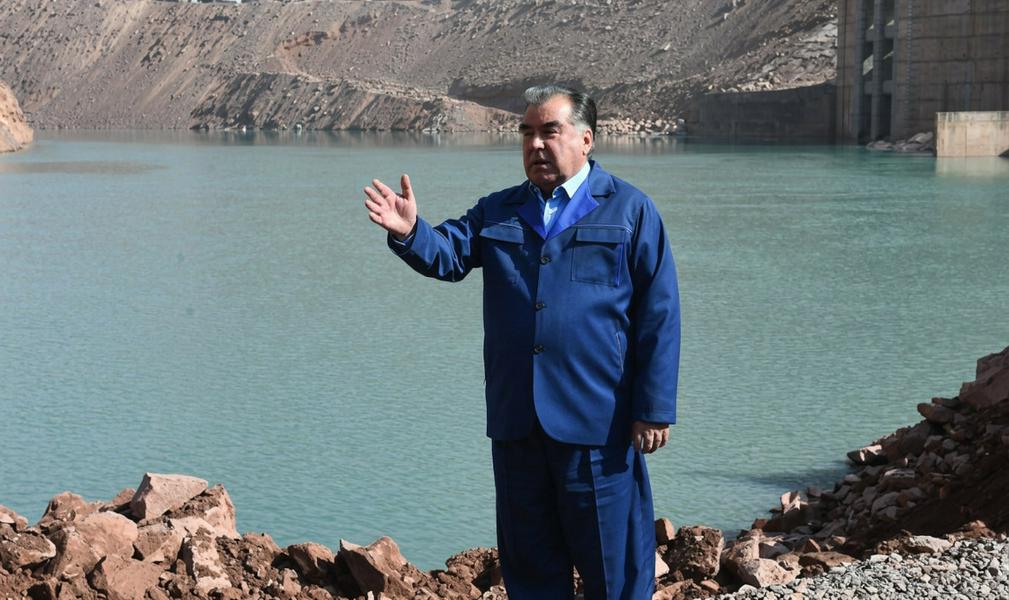 16 June16.06A Dam Named After One FamilyThe world's tallest dam is being built in Tajikistan on empty reserves and other people's loans
 -
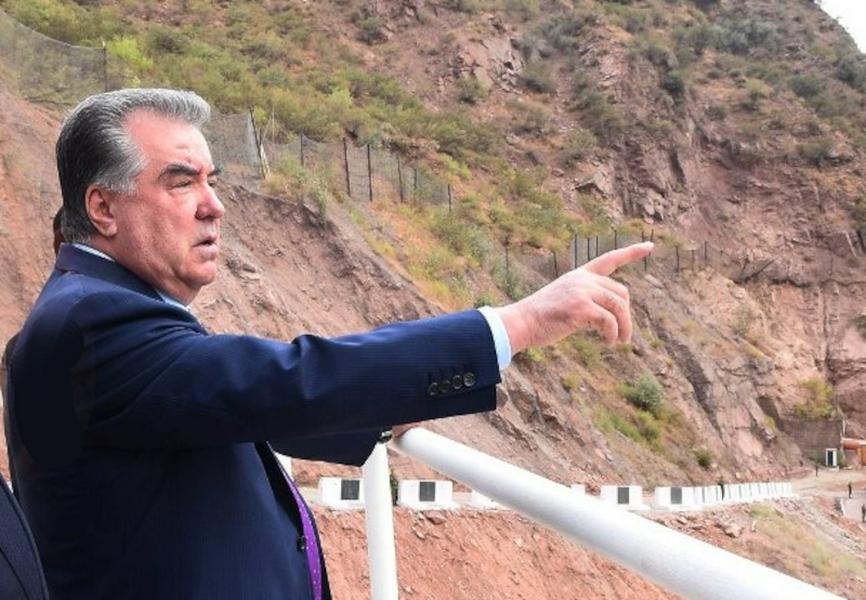 27 May27.05The Price of “Water Diplomacy”While Emomali Rahmon receives an honorary certificate “from the UN”, the Amu Darya keeps running shallow…
 -
 13 May13.05Video Revolution in the World of ReviewsHow an Uzbek entrepreneur is building a “YouTube for business” on the Western market.
 -
 06 May06.05ADVES CEO Marina Shabalina: Business reputation is key for companies from Central Asia
-
What China Can Offer Central Asia in the “Green” Economy
-

Japan to invest about $20 billion in projects across Central Asia over five years
-

Central Asia’s Rapprochement with Japan Comes with Hidden Pitfalls
-
Russian Scientists Revive the Plan to Irrigate Central Asia Using Siberian Rivers