 Photo: Reuters
Russia has proposed that the Taliban, who rule Afghanistan, begin military-technical cooperation by repairing Soviet- and Russian-made military equipment still in the Afghan army’s arsenal, Russian Presidential Special Representative for Afghanistan Zamir Kabulov told RIA Novosti.
He said restoring legacy equipment should be the first practical step in implementing a military-technical cooperation agreement signed by Moscow and Kabul on May 27 at the International Security Forum in the Moscow region. Deliveries of new military systems could follow at a later stage, Kabulov added.
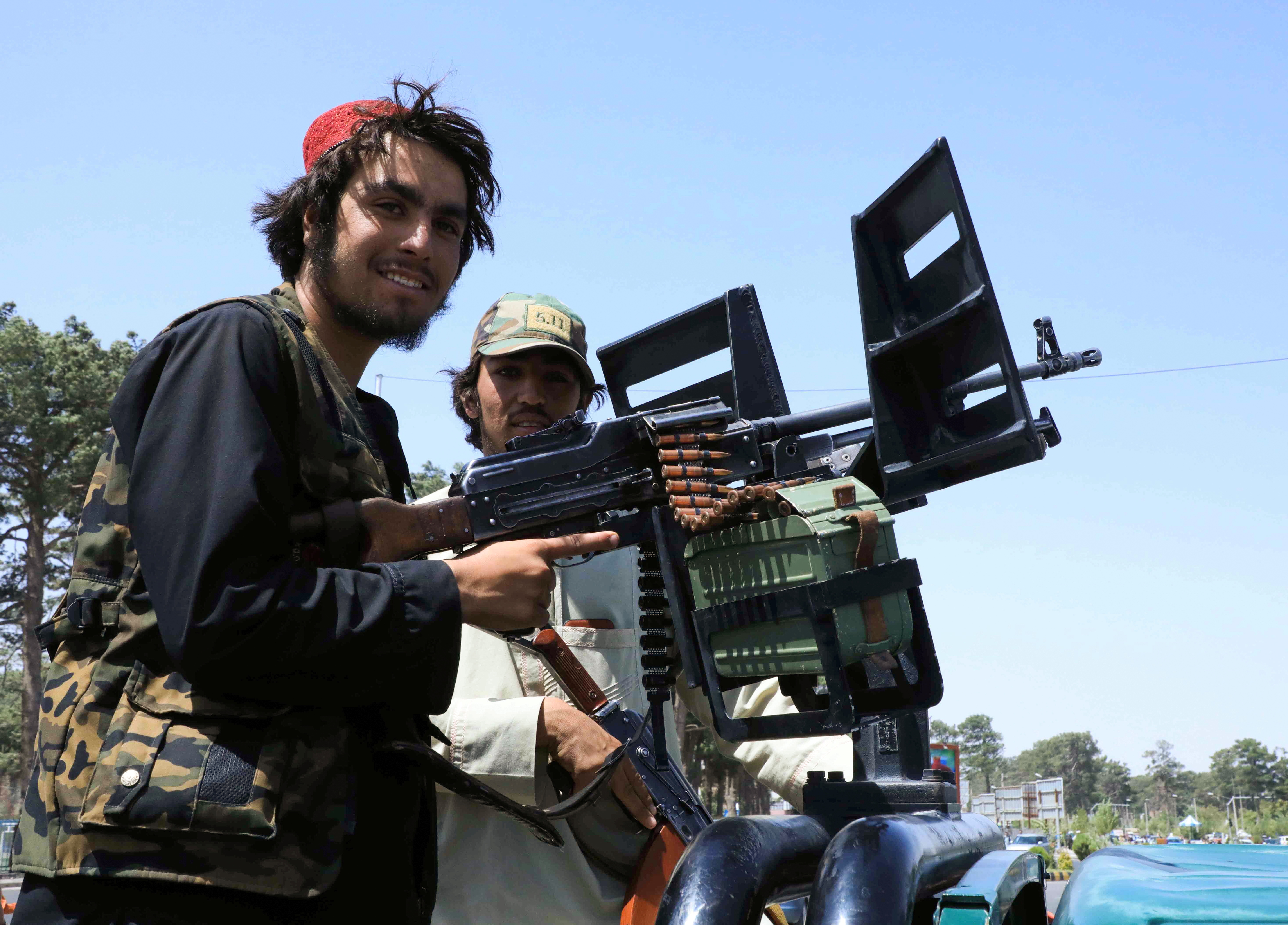
According to Afghanistan’s Defense Ministry, Taliban forces still possess dozens of Soviet-era T-55 and T-62 tanks, BMP-1 and BMP-2 infantry fighting vehicles, as well as Mi-17 and Mi-24 helicopters. In recent years, the Taliban have sought to return some of this equipment to service after long-term storage.
Estimates by Military Balance suggest Afghan authorities also operate three An-26 transport aircraft and one An-32, along with Soviet-era artillery systems including 122mm D-30 howitzers, BM-21 Grad multiple rocket launchers, 82mm 2B14 Podnos mortars, and large quantities of small arms.
The Taliban military remains a heterogeneous force formed from various armed groups. Mohammad Omar Nessar, a researcher at the Russian Academy of Sciences’ Institute of Oriental Studies, ранее noted that Kabul needs to restore helicopter capabilities and control its airspace to more effectively counter Pakistan. Yuri Lyamin, a senior researcher at the Center for Strategies and Technologies, said the Taliban require spare parts, ammunition, equipment, low-cost drones, and air defense systems.
Lyamin added that a stable Afghanistan is in Russia’s interest, provided the Taliban adhere to commitments on combating наркотрафик and terrorism.
“As long as the Taliban meet these obligations, military-technical cooperation is justified. However, its scope must also take into account Kabul’s relations with neighboring countries,” he said.
Russia’s engagement with the Taliban remains a sensitive issue for Tajikistan. Dushanbe shares a long border with Afghanistan, does not recognize Taliban rule, and has consistently called for the formation of an inclusive government in Kabul. At the same time, Tajikistan maintains close military ties with Russia, hosting the 201st Russian military base, Moscow’s largest overseas facility.
Tajik authorities have not publicly commented on Moscow’s agreement with the Taliban or Kabulov’s remarks on equipment repairs.
Pakistan, which is in open conflict with the Taliban, has also not officially responded. However, Taliban Defense Minister Mohammad Yaqoob, after returning from Moscow, said Pakistan “will soon not dare” to attack Afghan territory and that implementation of the agreement with Russia would begin shortly.
Contacts between the Kremlin and the Taliban date back to at least 2017. At the time, Umar Safi, former governor of Afghanistan’s Kunduz province, told Pashto-language radio Spogmai that the Taliban had allegedly sent damaged or captured heavy equipment to Tajikistan for repair by Russian specialists. He claimed the equipment was then returned to Afghanistan via the Panj River. Tajik authorities denied these reports.
Amid those claims, Kabulov confirmed that Moscow maintained contacts with the Taliban, citing the need to ensure the security of Russian diplomatic missions and citizens, as well as cooperation against ISIS. He said Russia and the Taliban share common interests in countering the group.
The Taliban seized power in Afghanistan in 2021 following the withdrawal of US and NATO forces. In April 2025, Russia removed the group from its list of terrorist organizations, and in July formally recognized the Taliban government, accepting the ambassador of the Islamic Emirate of Afghanistan in Moscow. Since returning to power, the Taliban have conducted operations against internal opponents, including ISIS, as well as in border regions.
*ISIS is designated as a terrorist organization in Russia and Uzbekistan.