 Photo from timesca.com
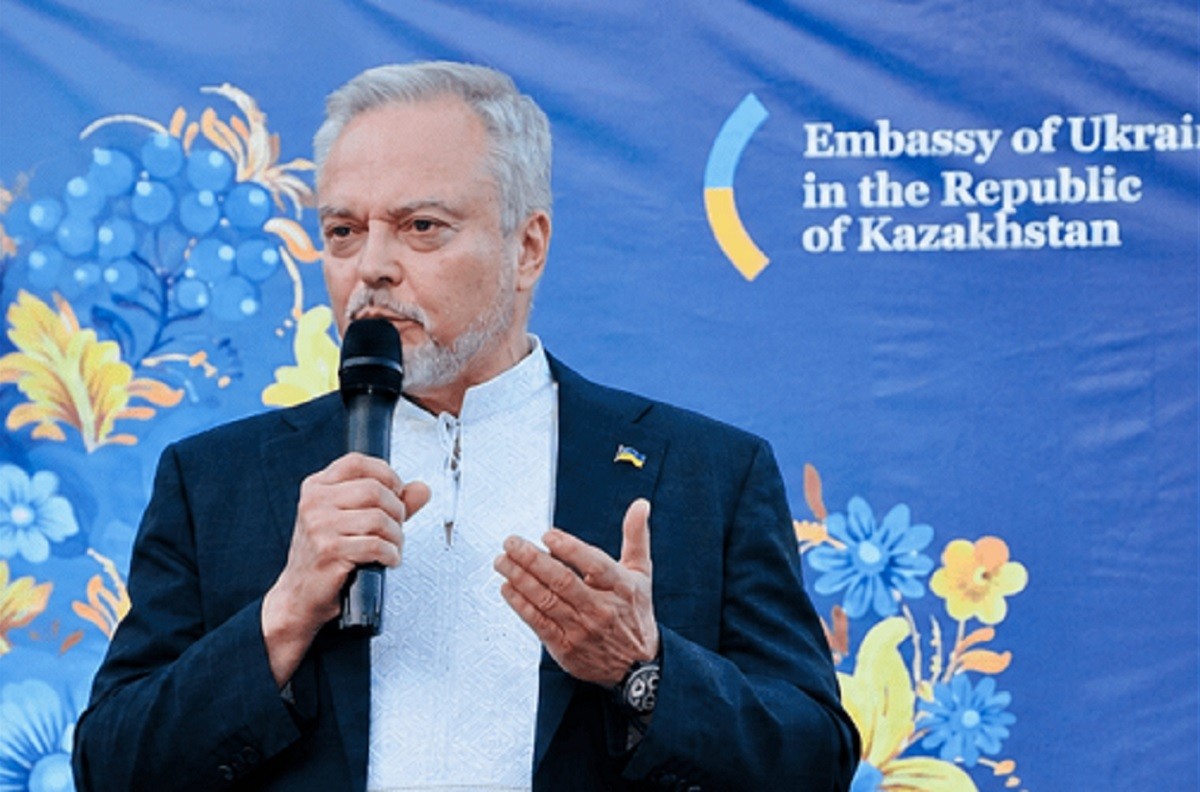
Ukraine has denied any involvement in the attacks on tankers carrying Kazakh oil through the terminal of the Caspian Pipeline Consortium (CPC), Ukraine's Ambassador to Kazakhstan, Viktor Maiko, said in a comment to The Times of Central Asia.
According to the diplomat, Kyiv understands and shares Kazakhstan's concern over the July attacks on civilian vessels near the CPC marine terminal off Novorossiysk.
«To date, there is no evidence that these attacks were carried out by the Ukrainian side. I therefore ask you to refrain from hasty and unfounded accusations against Ukraine, whether direct or indirect,» Maiko said.
The ambassador also recalled that Ukrainian authorities had previously warned international partners about possible Russian provocations involving Ukrainian drones. Russian electronic warfare systems, he said, are capable of intercepting Ukrainian drones or altering their course, which is why Kyiv believes this scenario warrants a thorough investigation.
Maiko stressed that the Armed Forces of Ukraine do not strike civilian targets, including on Russian territory. Legitimate targets, he said, are exclusively military facilities and infrastructure supporting Russia's military operations.
«Kazakhstan, its citizens, infrastructure, and economic interests have never been and are not regarded by Ukraine as military targets. Any attacks on the infrastructure of the Caspian Pipeline Consortium or other economic and energy facilities of the Republic of Kazakhstan are not in Ukraine's interests,» the diplomat noted.
He added that Ukraine views Kazakhstan as a friendly state and an important partner in Central Asia, expressing hope for the further development of bilateral relations based on mutual respect and constructive dialogue.
Earlier, Kazakhstan's Ministry of Foreign Affairs described the drone attacks on civilian vessels carrying oil through CPC infrastructure as an encroachment on the country's economic interests and said it intended to assess the damage, reserving the right to seek compensation under international law.
The Caspian Pipeline Consortium is the main route for exporting Kazakh oil to global markets: more than 80% of the country's oil exports pass through its system. The pipeline, roughly 1,500 kilometers long, links fields in western Kazakhstan with a marine terminal on the Black Sea coast, where oil is loaded onto tankers. The consortium's shareholders include Russia, Kazakhstan, the US company Chevron, and other international oil and gas corporations.
In recent weeks, CPC vessels and infrastructure have come under regular attack, disrupting exports and driving down oil production in Kazakhstan.
In early July, the tanker Yasa Polaris, chartered by Chevron and heading in for loading, was attacked by a drone. The vessel escaped serious damage.
On July 17, drones attacked the tanker Nordic Zenith as it headed toward the consortium's marine terminal. After a double strike, a fire broke out on board and the crew sent a distress signal. Thirteen sailors were evacuated, while nine others voluntarily remained on board. The crew extinguished the fire, but the vessel was damaged and rendered unfit for loading oil.
On July 19, drones attacked the tanker ASIA, carrying oil from Tengizchevroil (Chevron), and the tanker NISSOS IOS, which was being loaded with oil from Kashagan B.V. and Maten, a subsidiary of KazMunayGas.
On July 20, the tanker NELSA, positioned at the single-point mooring buoy SPM-1, came under attack.