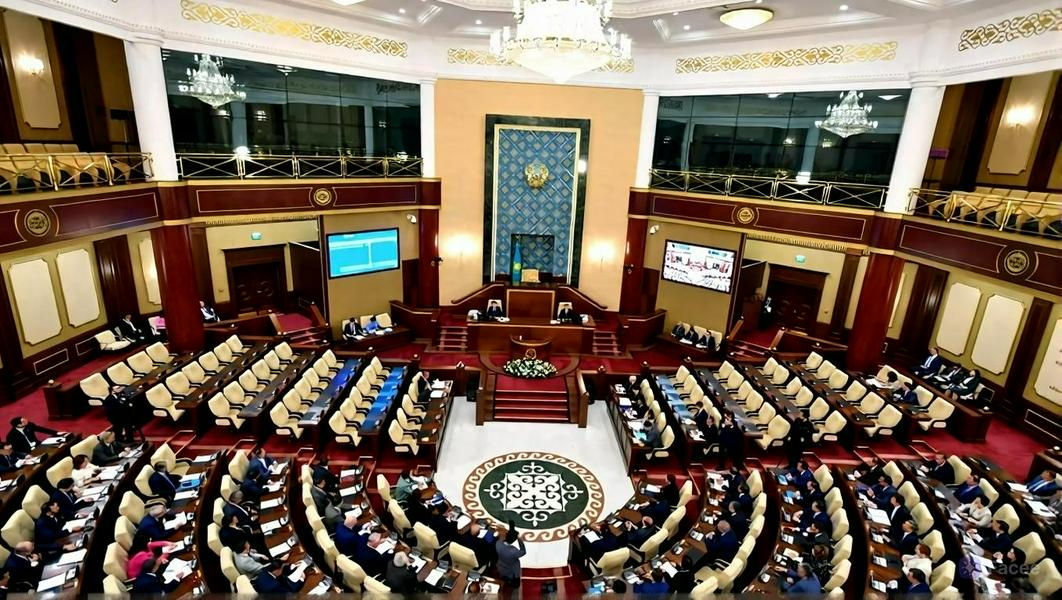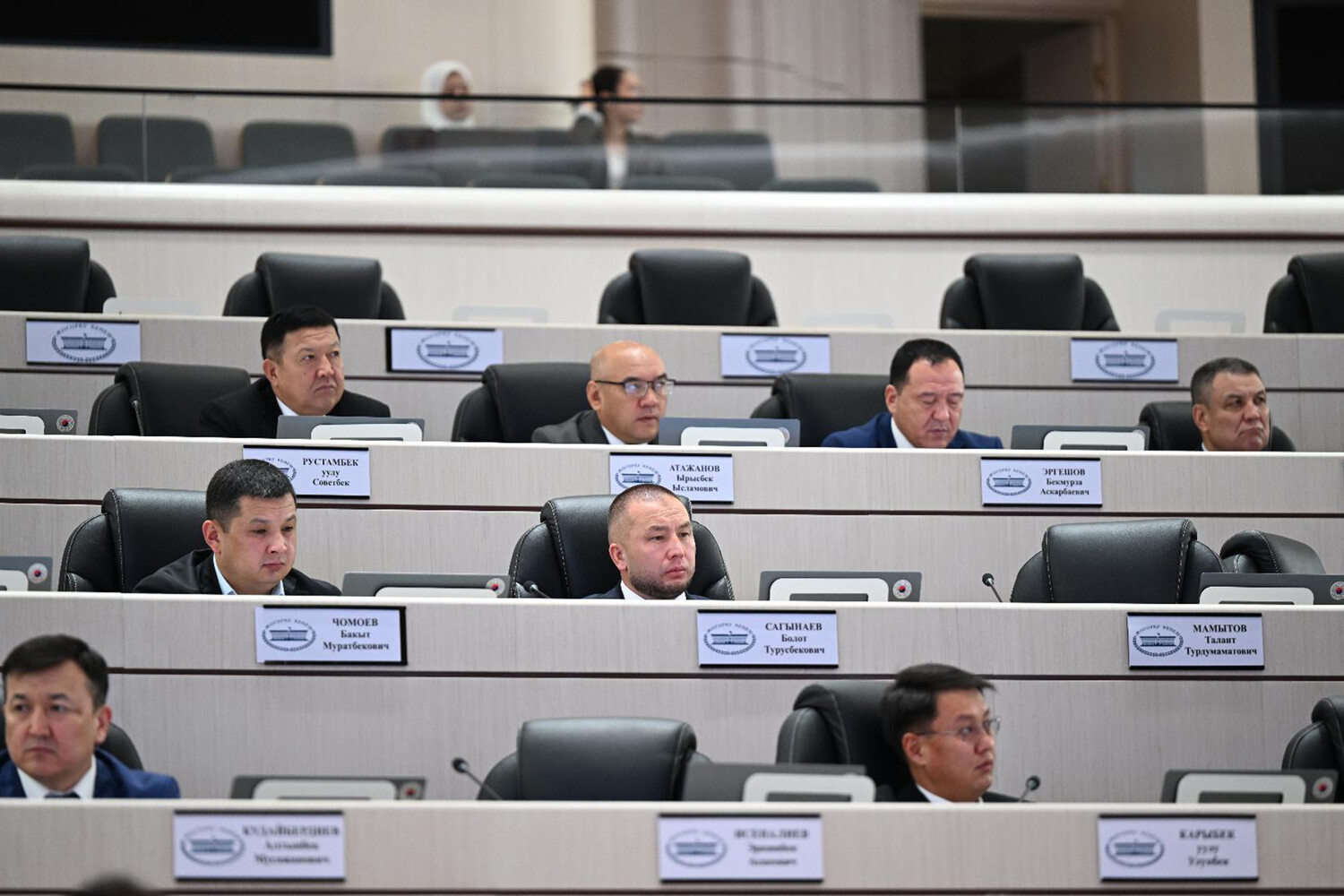
On June 4, deputies of the Jogorku Kenesh, the parliament of Kyrgyzstan, approved in the first reading a draft law banning sex change and the alteration of gender data in official documents, Kaktus.Media reported.
The amendments would be made to the Family Code, the law «On Acts of Civil Status,» and the law «On the Protection of Citizens' Health in the Kyrgyz Republic.» The bill was initiated by parliament speaker Marlen Mamataliev, along with deputies Bolot Sagynaev, Aibek Altynbekov, Edita Taigaraeva, Aigul Akhmedova, Saltanat Amanova, and Bakyt Chomoev.
Presenting the draft to parliament, Sagynaev said the current law leaves a «legal gap» that allows people to change their gender record in civil status acts — and, by extension, in their passports — on the basis of medical certificates. Such a practice, he argued, poses risks to demographic policy, public morality, national security, and the sustainable development of the state.
Sagynaev also tied the issue to Kyrgyzstan's national traditions and legal system. He noted that Kyrgyz surnames and patronymics use the words «uulu» («son») and «kyzy» («daughter»), which are linked to a person's biological sex.
«The possibility of administrative sex change undermines these cultural and legal foundations, creates contradictions in the system of kinship, and calls into question the very identity of a person in the context of national traditions,» he said.
Legalizing sex change in documents, Sagynaev added, could create conflicts in family law, including in marriage and the determination of parental rights. He also pointed to potential risks in the enforcement of sentences, military service, crime prevention, and sport.
The draft law stipulates that a person's sex is determined solely by biological — anatomical and genetic — characteristics recorded at birth. A change of sex in the birth record would not be recognized and would not alter the grounds for acquiring or terminating rights and obligations, including marriage and the establishment of motherhood and fatherhood.
A separate block of amendments concerns minors. The bill prohibits any actions aimed at changing their «sexual self-awareness» or fostering the idea that the sex recorded at birth can be changed. Medical, surgical, and psychological interventions for this purpose would be banned. Parents and guardians would be required to raise children «in accordance with their biological sex given at birth» and to shield them from interventions aimed at sex change.
The draft law also proposes a direct ban on marriage between people of the same biological sex.
In civil status registration, a gender record could be changed only to correct a technical error — a misstatement or typo made during the original birth registration. Medical, judicial, or other documents would not serve as grounds for changing it.
The law «On the Protection of Citizens' Health» would be amended to ban medical interventions — including surgery and hormone therapy — performed for the purpose of sex change. An exception is provided for treating congenital anomalies of sex development, subject to a medical commission's conclusion and a court ruling.
During the debate, deputy Zhyldyz Sadyrbaeva raised cases in which a child's sex cannot be determined immediately after birth. Sagynaev replied that the bill provides exceptions for people with congenital anomalies of sex development.
Deputy Health Minister Tilek Mamadaliev told the meeting that the Health Ministry has registered no official cases of sex change. He said that a citizen who underwent such surgery abroad and needs medical care, including hormone therapy, could still receive it as a patient — but under the bill would not be able to change their gender in documents.
Yet, as Fergana noted, the ministry's claim contradicts previously published data. In 2018, a National Hospital representative reported 10 sex change operations over four years, and in 2017 the State Registration Service reported 12 applications to change gender data in passports. Moreover, since 2017 Kyrgyzstan has had in force a Health Ministry guideline on providing medical and social assistance to transgender, transsexual, and gender non-conforming people.
In Russia — where some Kyrgyz transgender people previously went for safety — a ban on sex change has been in effect since July 2023. The law prohibits medical interventions, including the use of medications, aimed at sex change, with an exception for treating congenital anomalies of sex development in children on the basis of a medical commission's decision.
Elsewhere in Central Asia, there are no strict bans. In Kazakhstan, current rules allow medical examination and sex change for capable individuals with gender identity disorders who have reached the age of 21; the procedure involves a medical commission, hormone therapy, surgical correction, and subsequent document replacement. In Uzbekistan, sex change was added in 2025 to the list of grounds for changing a surname, first name, and patronymic upon presentation of a medical certificate. For Tajikistan and Turkmenistan, little current open data exists on bans comparable to Russia's or the proposed Kyrgyz one: human rights reports from earlier years suggest that in Tajikistan changing documents after surgery is theoretically possible but remains complicated, while in Turkmenistan activists describe the absence of any defined mechanism for legal gender recognition.