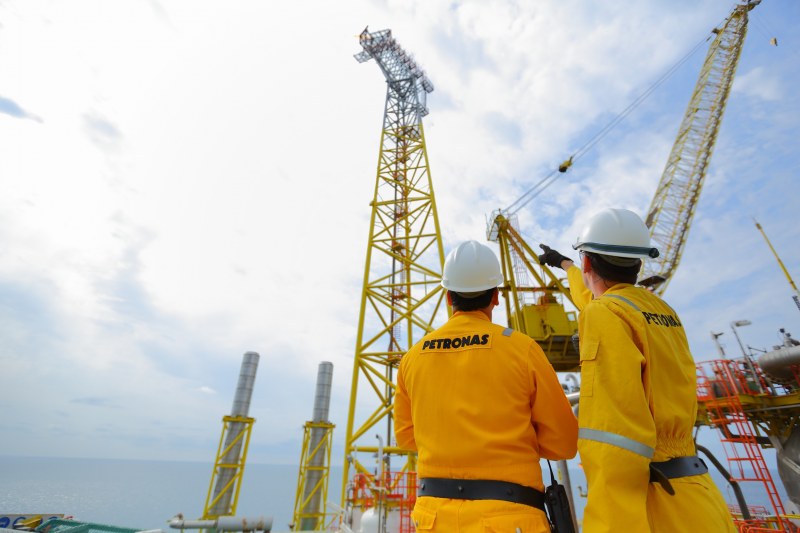
President of Turkmenistan Serdar Berdimuhamedov has authorized the state concern Türkmennebit to sign a new agreement with Petronas Carigali (Turkmenistan) Sdn Bhd and the state enterprise Hazarnebit to develop licensed blocks in the Turkmen sector of the Caspian, according to the state news agency TDH.
The document was signed during Malaysian Prime Minister Anwar Ibrahim’s visit to Ashgabat. Malaysian media had earlier identified oil and gas cooperation as a central topic of the trip. Malaysia’s ambassador to Turkmenistan, Mohd Suhaimi Ahmad Tajuddin, said discussions focused on extending Petronas’s operations in the country for another 20–25 years.
Petronas has operated in Turkmenistan since 1996 and has invested about $11.8 billion. Turkmen media say the expanded partnership is aimed at ensuring the efficient use of Caspian license blocks and advancing national oil and gas sector priorities. The specific blocks covered by the agreement have not been disclosed.
License blocks are designated offshore areas where companies conduct geological surveys, assess reserves of oil, gas, or condensate, and, if commercially viable, proceed to development. Given Petronas’s three-decade presence in Turkmenistan, the agreement likely includes access to additional blocks.
Several foreign companies are already active on Turkmenistan’s Caspian shelf. The largest operators remain Petronas and the UAE’s Dragon Oil, which has managed the Cheleken Contract Territory since 2000. In 2025, XRG, the international investment arm of ADNOC, joined the Block I project. Another project, Block III, led by Buried Hill, is tied to the Serdar/Dostluk field and has faced complications due to a past dispute between Turkmenistan and Azerbaijan.
According to the U.S. Energy Information Administration (EIA), Turkmenistan holds the world’s fifth-largest proven natural gas reserves, estimated at 11.3 trillion cubic meters as of January 1, 2025. In 2023, the country produced about 85 billion cubic meters of dry gas, making it the largest gas exporter in the Caspian region.
China remains the primary destination for Turkmen gas. The EIA reports that pipeline exports to China, including via the Central Asia–China route, reached about 34 billion cubic meters in 2022. With the planned construction of Line D, analysts expect exports could rise to roughly 65 billion cubic meters.
At the same time, Ashgabat is seeking to diversify export routes. The EIA highlights several options, including the TAPI pipeline to Afghanistan, Pakistan, and India, swap supplies to Iraq via Iran, and a potential Trans-Caspian route to Europe through Azerbaijan and Turkey.