Kazakhstan has frozen the property and vehicles of the North Caspian Operating Company (NCOC), the international consortium that operates the Kashagan oil field. The information was published in the Justice Ministry's automated enforcement-proceedings database, Reuters reports.
According to the registry, enforcement proceedings were opened on July 21. Besides freezing property and vehicles, authorities have barred the company from carrying out actions in the electronic notary system. The documents do not specify which assets are subject to the restrictions.
The enforcement proceedings stem from efforts to collect an environmental fine of 2.3 trillion tenge (about $4.9 billion) from the Kashagan operator. Kazakhstan's deputy justice minister, Daniel Vaisov, had earlier said NCOC was required to pay the fine voluntarily by July 20 or face forced collection.
The Justice Ministry told Interfax that the state bailiff would take all enforcement measures provided for by law. The law also allows for the freezing of a debtor's bank accounts, though that measure has not yet been applied to NCOC.
The dispute between Kazakhstan and the Kashagan operator has dragged on for several years. An inspection found that the consortium had exceeded permitted sulfur storage limits by more than 1.2 million tons, along with other environmental violations, including discharging insufficiently treated wastewater and flaring gas without the required permits.
NCOC tried to challenge the inspection's findings in Kazakh courts, but courts at every level, including the Supreme Court, rejected the company's claims.
In February 2026, NCOC's contractors launched international arbitration proceedings at the International Centre for Settlement of Investment Disputes (ICSID) in Washington. The consortium also said a UNCITRAL arbitration tribunal had issued an injunction barring Kazakh authorities from taking forced-collection measures over the fine.
Kazakhstan's Justice Ministry, however, has said that interim measures ordered by international commercial arbitration do not take precedence over national law, meaning the demand to collect the fine remains in force.
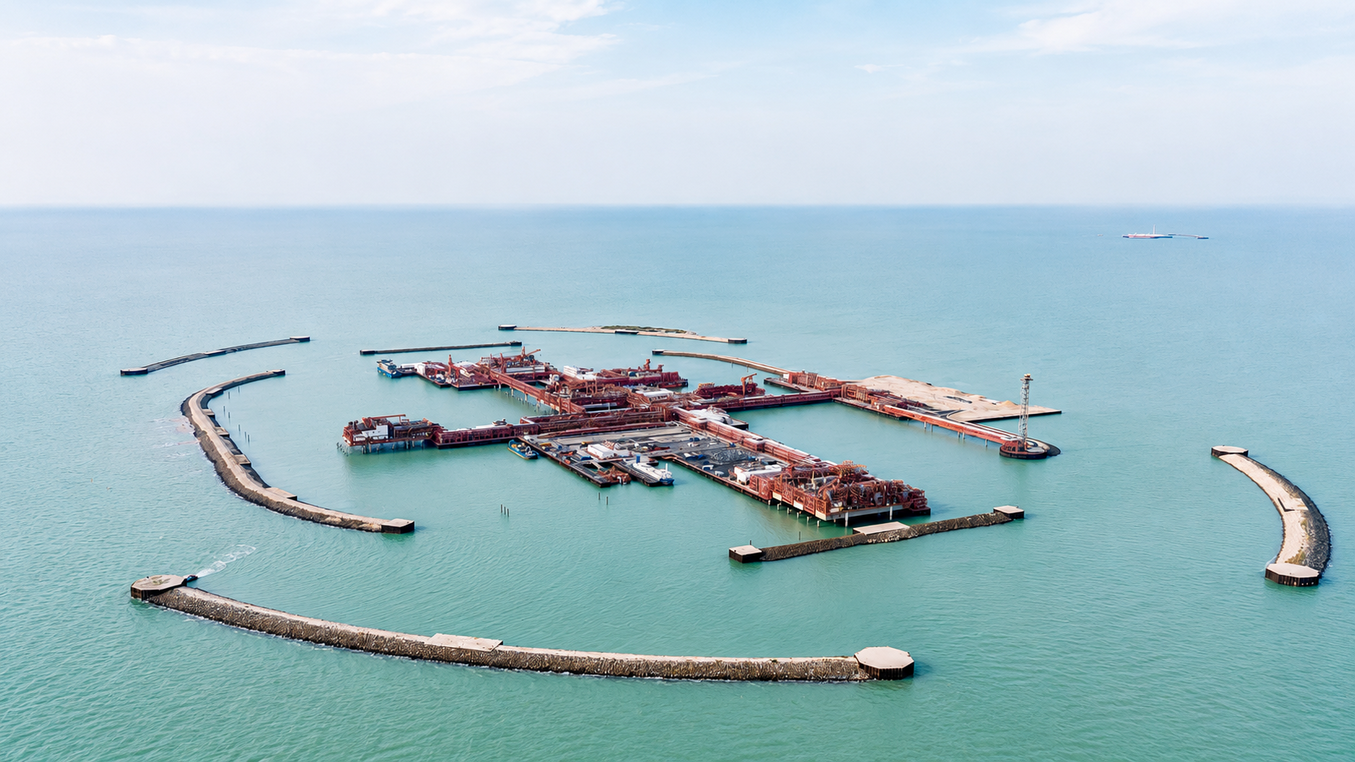
North Caspian Operating Company develops the Kashagan field, one of the largest oil fields discovered worldwide in recent decades. Commercial production there began in 2016. The consortium includes Shell, Eni, TotalEnergies, ExxonMobil, CNPC, Inpex, and the national company KazMunayGas.
☝️ Fergana expert commentary on the asset freeze imposed on Kazakhstan's Kashagan oilfield operator:
— The conflict over Kashagan is far from a mundane environmental dispute. What we're seeing is a textbook escalation tactic, through which Astana pursues two goals at once: redirecting financial flows in its favor, and signaling that the era of absolute preferences for foreign capital in Kazakhstan has definitively ended.
Kashagan is the heart of Kazakhstan's oil and gas sector, with recoverable reserves of roughly 13 billion barrels, and the tenge's exchange rate, the National Fund's revenues, and overall GDP growth all depend directly on its operations. The project involves oil majors on the scale of Eni, Shell, ExxonMobil, and TotalEnergies — each holding an equal stake of about 16.8% in the field's operator, North Caspian Operating Company (NCOC) — so any tough moves by the authorities immediately reverberate through Kazakhstan's relations with Washington, Brussels, Rome, and Beijing (China's CNPC holds an 8.3% stake in NCOC).
The production-sharing agreements signed back in the 1990s granted investors enormous tax and regulatory concessions, and the current environmental fine of nearly $5 billion (2.3 trillion tenge, according to Fergana) represents the state's attempt to break that outdated balance of power.
▫️ Nationalizing or confiscating Kashagan's infrastructure is virtually out of the question. First, neither the state nor KazMunayGas currently has the technological expertise to independently manage such a complex offshore field with high hydrogen sulfide content, and any failure would risk catastrophe. Second, directly seizing assets from major Western companies would instantly destroy the country's investment climate and turn Kazakhstan into a pariah. Third, such a move would inevitably trigger large-scale counterclaims and the freezing of the republic's sovereign assets abroad through international arbitration — and this is already happening: NCOC's contractors launched proceedings at the ICSID in Washington in February 2026, and a UNCITRAL tribunal imposed an injunction against forced collection of the fine, which the Kazakh Justice Ministry, for its part, refuses to recognize as taking precedence over national law.
In reality, the matter will likely end in pragmatic bargaining. The Kazakh Justice Ministry is using the seizure of vehicles and auxiliary property as leverage to bring the operator to the negotiating table. The most probable outcome is a compromise agreement under which the fine is substantially reduced in exchange for the consortium's commitment to invest in local infrastructure — for example, building a gas-processing plant or funding social projects. A less likely but possible scenario would see Astana pressuring its partners to renegotiate the production-sharing formula so the state gets a larger share of profit oil starting now. No one will seize the plant, but investors will still have to pay a hefty price to keep operating under the new realities.