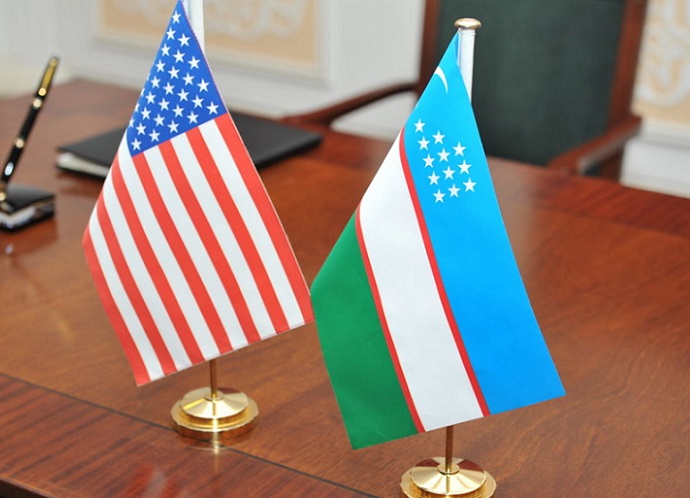
Beginning January 1, 2026, residents of Uzbekistan will be allowed to invest in companies registered in the United States without obtaining permission from national authorities and without limits on the size of their investments. The Central Bank of Uzbekistan introduced the relevant amendments to regulations governing foreign-exchange operations related to capital movement on December 16, according to Gazeta.uz.
The regulatory changes were approved in line with instructions from President Shavkat Mirziyoyev, formalized in his decree on the establishment of the U.S.–Uzbek Business and Investment Council.
As a result, starting next year, Uzbek citizens and companies operating in the country will be entitled to invest in U.S. enterprises, acquire equity stakes and shares, establish their own businesses in the United States, and transfer funds to support the working capital of their overseas subsidiaries.
The sole requirement is that the funds invested in U.S.-based entities must be held in accounts with Uzbek banks.
At the same time, the existing cap on investment amounts has been abolished. Previously, transactions exceeding $10,000 required approval from the Uzbek government.
The Central Bank noted, however, that restrictions on capital movement to other countries will remain in place. The liberalization applies exclusively to operations involving U.S. residents.
Financial analyst Otabek Bakirov welcomed the decision, while noting that the new rules could lead to a redistribution and formalization of financial flows through companies registered in the United States but effectively operating in Uzbekistan. According to him, this trend could particularly affect recipients of government contracts and budget funds, as well as various affiliated industrial and financial groups.
Behzod Khoshimov, a professor at New York University Abu Dhabi, also gave a positive assessment of the lifting of restrictions on investment in the United States. He acknowledged that some actors might attempt to use the new rules in bad faith, but emphasized that this is a matter for legal regulation. The key point, he said, is that residents of Uzbekistan are being granted access to the world’s largest financial market.
“It would be very good if households in Uzbekistan were able to buy stakes in American companies and benefit from the U.S. financial market, both for savings and for investment,” Khoshimov said. “Uzbek citizens were cut off from the largest market because of restrictions they imposed on themselves. Fewer restrictions is a good thing.”