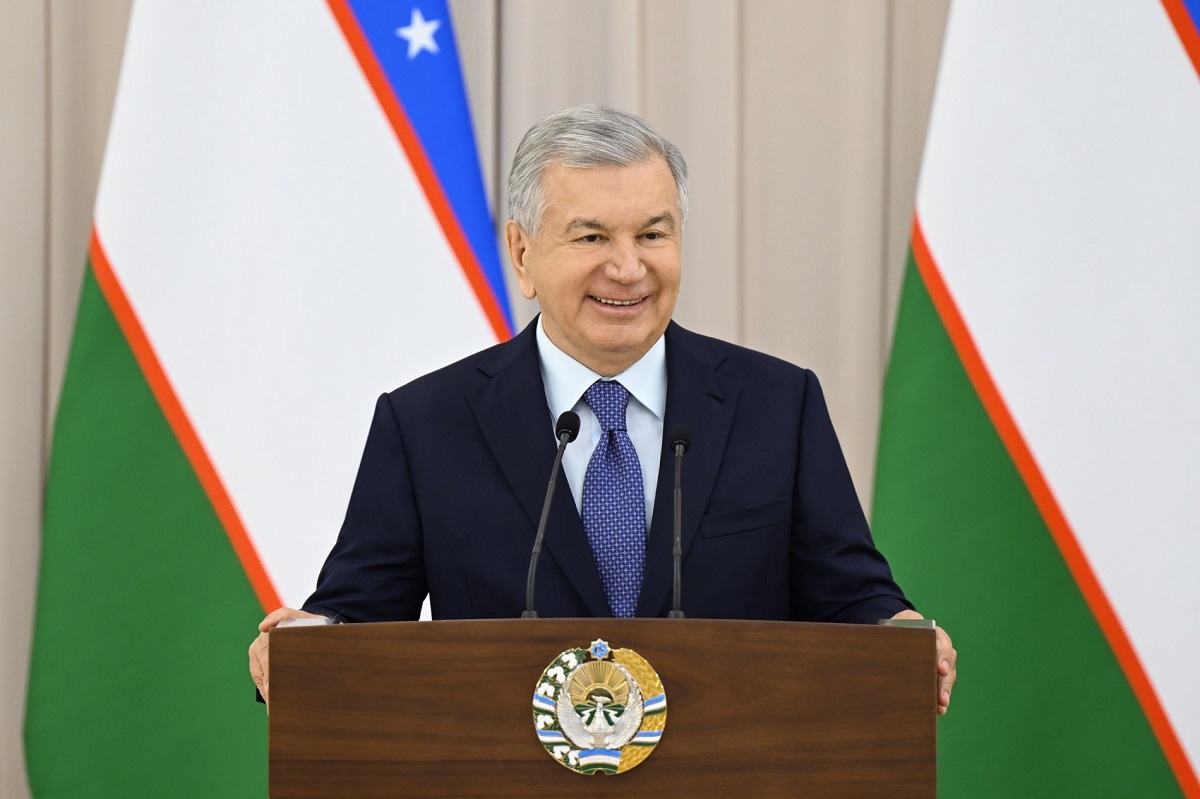
 Shavkat Mirziyoyev. Photo courtesy of the press service of the President of Uzbekistan
During a working trip to Bukhara Region, President of Uzbekistan Shavkat Mirziyoyev took part in a launch ceremony for 145 investment projects totaling $7.8 billion. According to the head of state's press service, the initiatives span diverse sectors of the economy, including petrochemicals, textiles, construction materials, mechanical engineering, digital technologies, agriculture, and other industries.
Specifically, implementation has begun on 55 initiatives valued at over $654 million, while construction has commenced on facilities for another 90 projects worth $7.1 billion.
Alongside domestic businesses and international financial institutions, investors from the United States, Canada, Germany, Japan, South Korea, Singapore, China, Vietnam, Turkey, the UAE, Saudi Arabia, Russia, and India are contributing to the regional economy.
According to expert forecasts,
the implementation of these projects will create more than 14,000 jobs, generate 22 trillion soums ($1.8 billion) in new annual production, and deliver $510 million in exports.
Bukhara Region is aggressively expanding its green energy capacity, having drawn $2 billion in clean energy investment over the past two years. Wind and solar power plants with a combined capacity of 1,750 MW, along with 63 MW energy storage systems and over 600 kilometers of high-voltage transmission lines, have already been commissioned.
At the same time, construction of the 300 MW Bash-2 wind farm continues in the Gijduvan district with Saudi Arabia's ACWA Power. In the Jondor and Peshku districts, Japan's Toyota and China's Sinoma are developing similar facilities with capacities of up to 1,000 MW. Additionally, a $165 million waste-to-energy plant is slated for the Kagan district in partnership with Chinese firms. Meanwhile, with assistance from Germany's Leman, a $150 million project will soon be rolled out to ensure the stable operation of pumping stations along the Amu-Bukhara canal.
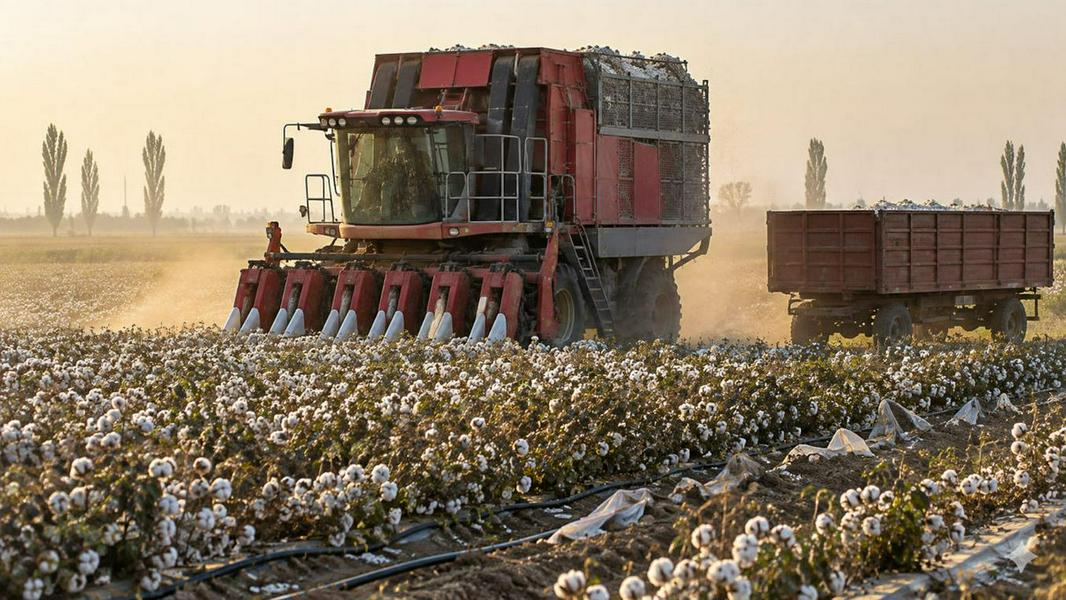
Building on the region's rich cotton-growing heritage, authorities are expanding textile clusters in Bukhara and the Romitan district. In Romitan, Chinese investors are prepared to channel $400 million into the project. Foreign partners have also proposed developing 9,000 hectares of land, which will raise the share of high-value-added products to 65% and boost exports by $100 million.
Bukhara is renowned as one of Uzbekistan's prime tourist destinations, and authorities continue to elevate its appeal to travelers. Efforts include building the Boqiy Bukhoro cultural and ethnographic park, modern hotels, and entertainment hubs, with plans to open properties under international brands such as Hotel Indigo, Hilton, and Holiday Inn.
«Overall, we are launching 19 projects worth a combined $3 billion. If we organize our work systematically, we can generate $5 billion in tourism export earnings in Bukhara alone,» Mirziyoyev emphasized.
The region is also preparing for major water infrastructure upgrades. Projects totaling $633 million are underway in collaboration with international organizations, bringing clean drinking water to 781,000 residents for the first time. Road construction and modernization will see another $565 million in investment.
The president also held a meeting on preparations for major international gatherings in Bukhara, including high-level meetings and summits with foreign delegations.
Noting that visitors form their first impressions of the city and region at the airport, train stations, and on the roads, Mirziyoyev reviewed progress on a new $300 million airport and the 23.5-kilometer highway linking it to the city.
Mirziyoyev instructed local officials to overhaul areas surrounding railway stations, improve parking facilities, street lighting, customer service, and public transit. Special attention was paid to expanding urban greenery tailored to Bukhara’s arid climate, emphasizing that tree planting must be paired with irrigation and drainage systems vital for plant survival.
During his visit, Mirziyoyev also toured the Bahauddin Naqshband complex, inspected the construction of a congress hall and modern hotels, reviewed the restoration of the Kosh-Madrasah architectural ensemble, and examined urban development projects spearheaded with partners from Vietnam.