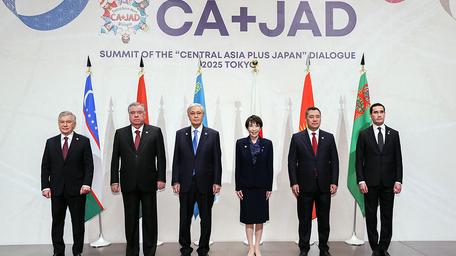
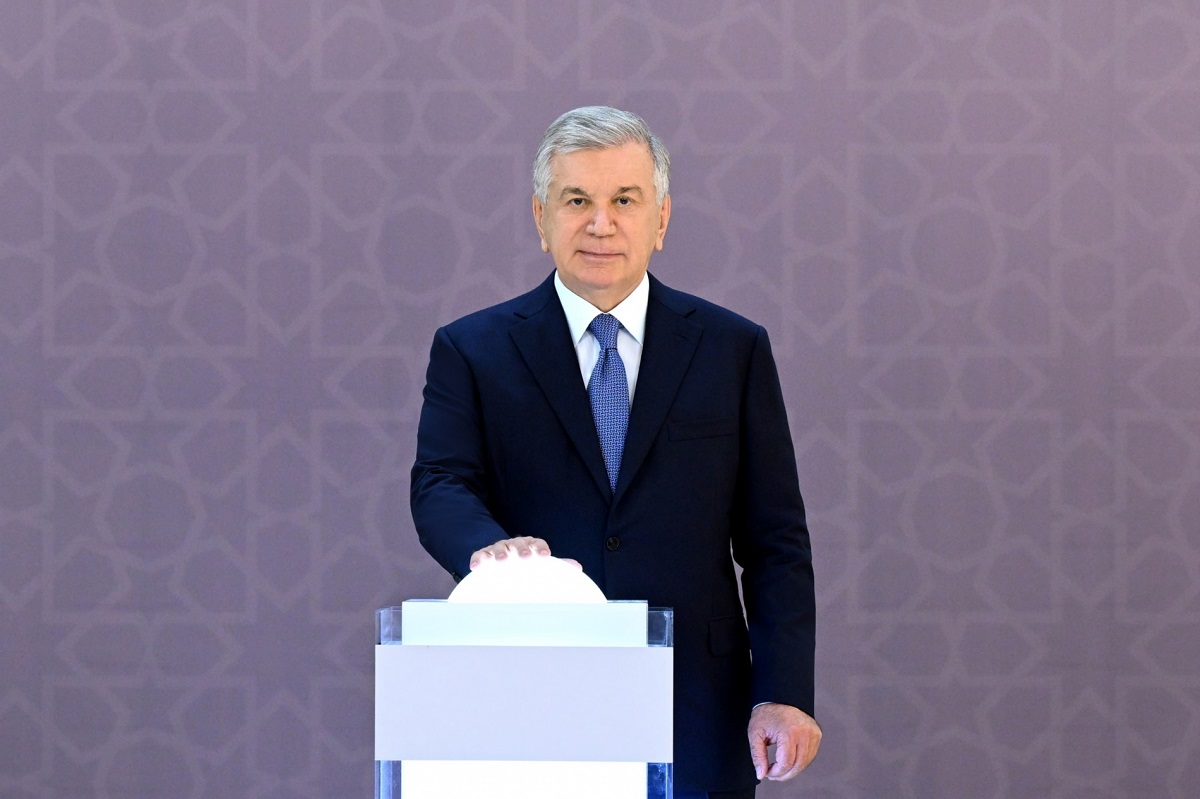
 Shavkat Mirziyoyev Photo by the press service of the President of Uzbekistan
President Shavkat Mirziyoyev launched more than 50 new projects in Karakalpakstan, a sovereign republic within Uzbekistan, during a working visit to the region. Total investment in the initiatives exceeds $7.5 billion, according to the presidential press service.
The president inaugurated 11 projects worth $592 million and launched construction on 47 facilities and enterprises valued at about $7 billion. The projects, all involving foreign partners, are expected to create 8,000 well-paid jobs in Karakalpakstan.
In the Kungrad, Takhiatash and Takhtakupyr districts, Chinese business partners are developing projects worth about $2.3 billion to produce digital currency and build artificial-intelligence data-processing centres. The first phase of Linkwise’s modular intelligent computing centre, valued at $150 million, has also been commissioned.
A gold-mining enterprise will be built at the Zengibobo deposit in the Karauzyak district, with investment estimated at about $20 million.
Energy and transport
Several of the initiatives concern the energy sector. Two wind power plants with a combined capacity of 300 MW, alongside a 100 MW electricity-storage system, have already entered operation in the Karauzyak district.
In Kungrad district, work is moving into an active stage on a 1.5 GW wind power plant that will later be linked to Uzbekistan’s unified power grid. The $2.6 billion project is being implemented in partnership with Saudi energy company ACWA Power. It includes the installation of 1,500 kilometres of high-voltage transmission lines and the construction and modernisation of several substations.
In Chimbay district, Korean investors are launching Karakalpakstan’s first facility for producing biogas from processed liquorice root. The plant is expected to produce 3 million cubic metres of biogas. In Nukus, a project has also begun to generate electricity through the thermal treatment of waste.
Sapsan Trans No'kis, a $20 million company operating Nukus’s public transport system, has begun operations. Twenty-five buses and electric buses have already arrived in the city, while another 75 vehicles are due to be delivered by the end of the year. The project is expected to create 200 jobs.
The European Bank for Reconstruction and Development will also purchase 112 electric buses for Nukus and finance the construction of a depot.
With support from the Asian Development Bank, construction is under way on a 92-kilometre section of the Guzar–Bukhara–Nukus–Beyneu highway. The project is valued at $233 million.
Urban development and healthcare
Turkish companies will build a $103 million retail and entertainment complex with recreation areas on the bank of the Dustlik Canal in Nukus. The facility is designed along the lines of Tashkent’s Seoul Moon complex. A separate $15 million shopping centre will be built in Amudarya district.
Karakalpakstan’s social infrastructure is also being expanded. During Mirziyoyev’s visit, the Sheikh Khalifa Hospital, built in cooperation with the United Arab Emirates, opened in Nukus. The $27 million facility is equipped with modern medical technology and can accommodate up to 100 patients.
The republic is also establishing the Karakalpak Scientific and Practical Medical Academy, a University of Medical Sciences and a hospital providing high-tech treatment. The university and hospital projects are being implemented by Indian investors under public-private partnership arrangements.
Mirziyoyev also attended a presentation of the planned New Uzbekistan residential district for young families in Nukus. The 270-hectare development will include apartment buildings, business centres, retail and entertainment facilities, and service infrastructure.
According to the presidential press service, Mirziyoyev’s programme in Karakalpakstan also included visits to an orchard and greenhouse farm, a poultry farm in Kegeyli district, building-materials plants in Nukus, educational institutions and the reconstructed Turan stadium in the regional capital. He also met residents of local mahallas, or neighbourhood communities, and addressed a gathering of regional activists and government officials.